
Sports Physiotherapy in Singapore: When Should You See a Sports Physio?

What Is Gait Training Physiotherapy and Who Needs It?
Sports Physiotherapy in Singapore: When Should You See a Sports Physio?
Sports injuries do not only happen to professional athletes.
It can range anywhere from a runner dealing with recurring knee pain to a football player recovering from an ankle sprain, or someone trying to return to sport after surgery.
The main difference is that sports physiotherapy looks beyond simply getting you out of pain. It considers the physical demands of the activity you want to return to, including strength, mobility, control, training load and confidence in movement.
So, when is normal soreness something you can manage yourself, and when should you see a sports physiotherapist?
When Should You See a Sports Physiotherapist?
1. Pain Keeps Returning When You Exercise
You rest for several days and the pain disappears. You start exercising again and it returns.
This cycle is a common reason people eventually seek physiotherapy.
A sports physiotherapist can assess both the painful area and the activities that repeatedly provoke the symptoms.
2. An Injury Is Affecting Your Training
You do not necessarily need to wait until an injury completely stops you from exercising.
Consider an assessment when you find yourself repeatedly modifying training because of symptoms, such as:
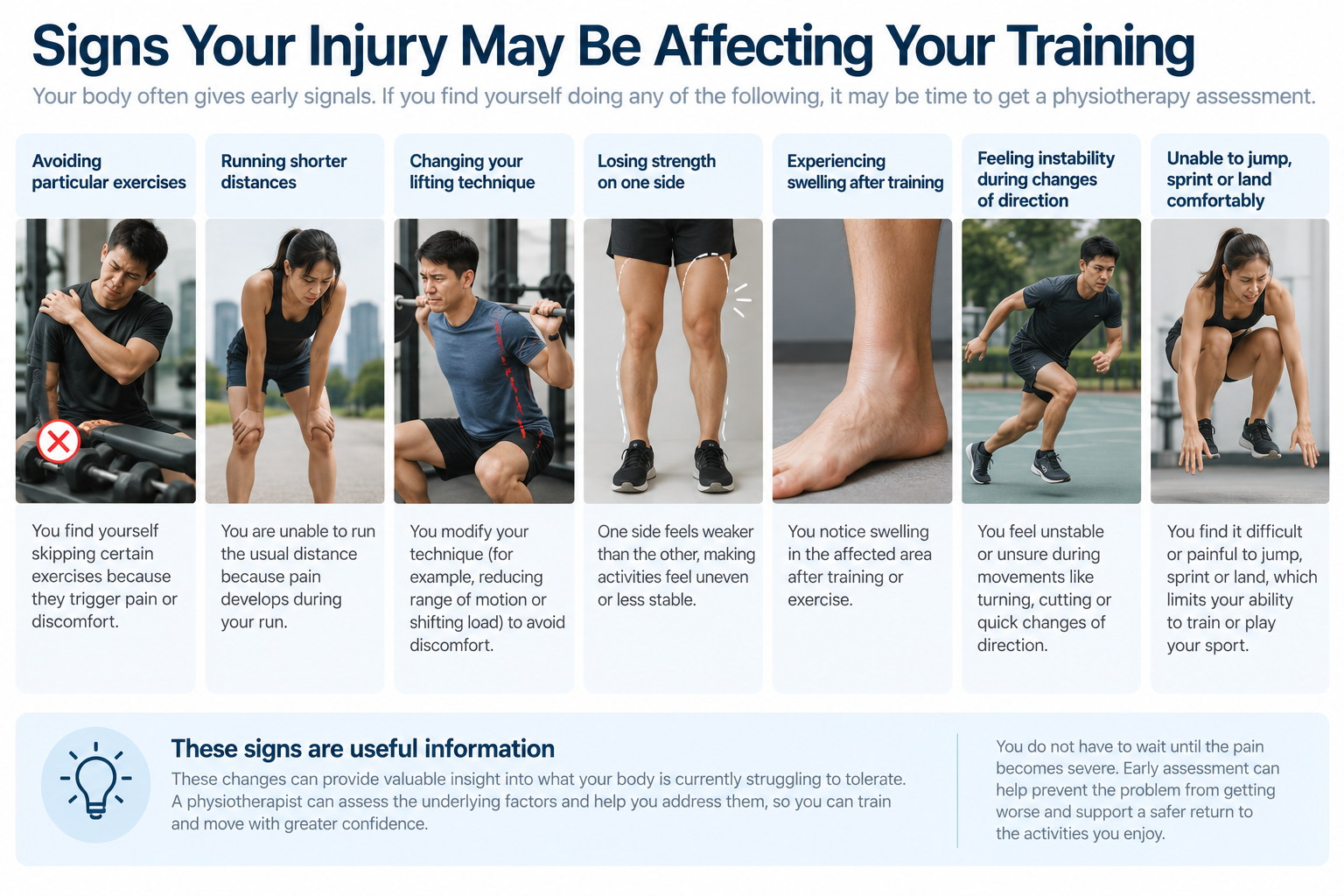
Signs Your Injury is Affecting you training
3. You Have Suffered a Sudden Sports Injury
Some sporting injuries have an obvious moment of onset.
You might roll your ankle, feel a pull while sprinting, land awkwardly from a jump or experience knee pain after changing direction.
Depending on the injury, physiotherapy assessment can help establish what structures may be involved and how much function has been affected.
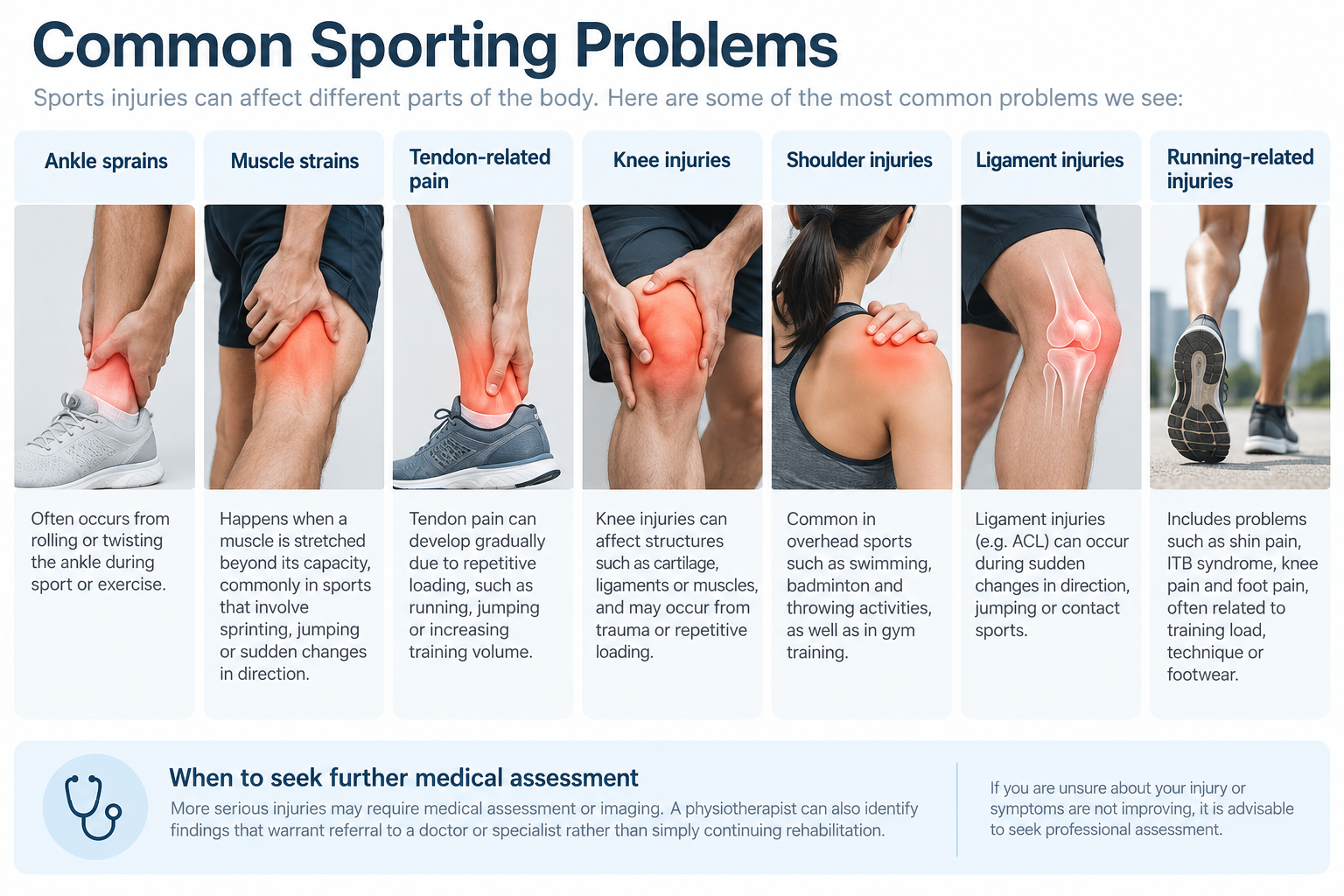
Common Sporting Problems
4. You Are Returning to Sport After an Injury
Feeling better is not necessarily the same as being ready for sport.
Pain may disappear before strength, power, balance or tolerance to sporting loads has fully recovered.
For example, returning to football may eventually require more than being able to walk and jog without pain. The player may need to accelerate, decelerate, change direction, jump, land and tolerate repeated efforts.
Similarly, someone returning to gym training may need to progressively rebuild the capacity to squat, pull, press or lift heavier loads.
Sports rehabilitation can therefore progress from restoring basic movement towards increasingly demanding activities that resemble the person's actual sport.
MoveMed's existing rehabilitation approach similarly considers objective factors such as strength, movement quality, functional performance and the ability to tolerate sport-specific activity rather than relying solely on a fixed recovery date.
5. You Are Recovering From Sports-Related Surgery
Sports physiotherapy can also form part of post-operative rehabilitation.
This may include recovery following procedures involving the:
ACL
Meniscus
Other knee ligaments
Cartilage
Shoulder
Ankle
The rehabilitation requirements will differ according to the procedure, healing stage and eventual activity goals.
Someone whose objective is returning to competitive sport may eventually require a different level of rehabilitation from someone whose primary goal is comfortable everyday movement.
Sports Physiotherapy at MoveMed: Meet the Team
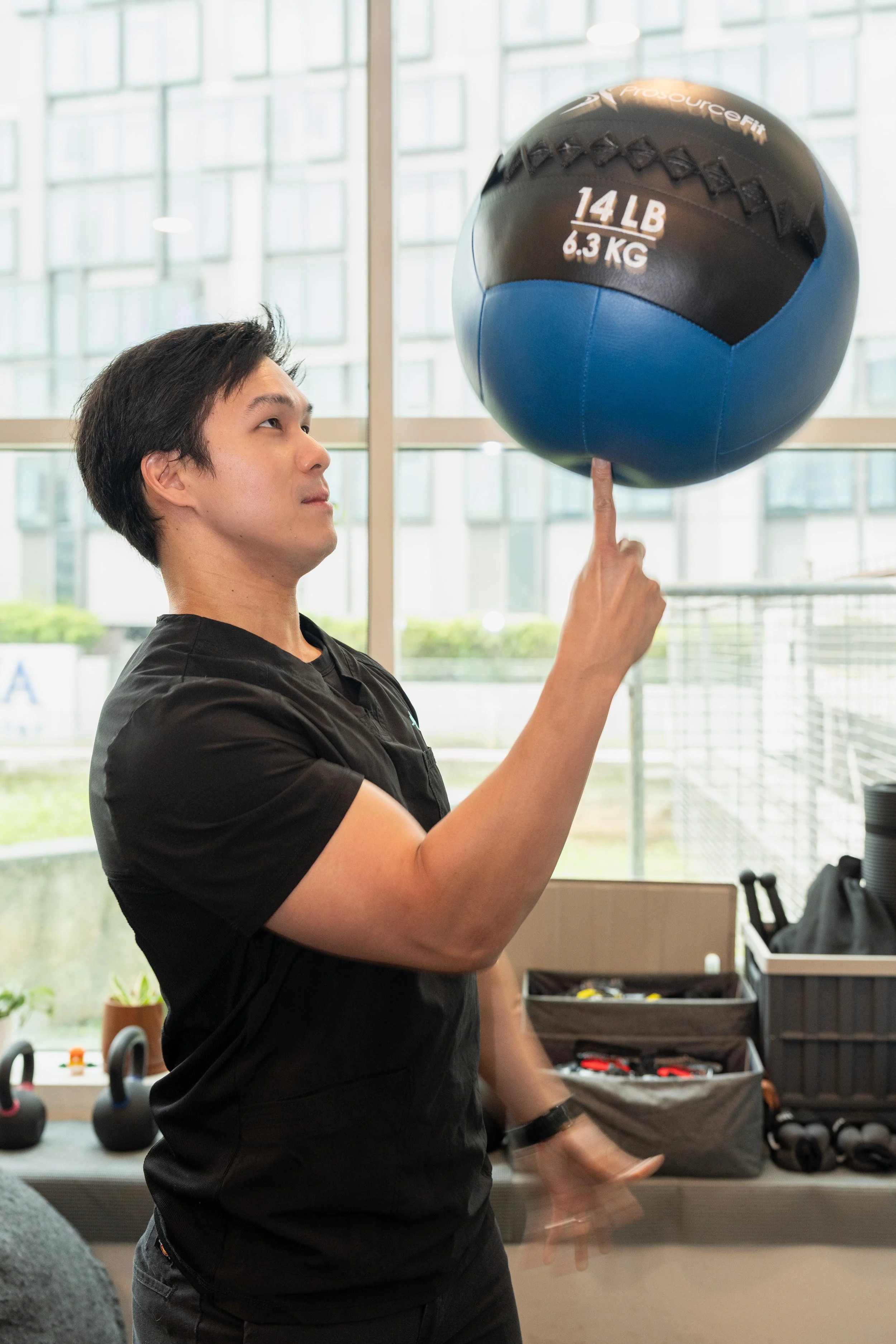
Ben Tan — Founder & Principal Physiotherapist
Ben Tan is MoveMed's Founder and Principal Physiotherapist. He holds a Bachelor of Physiotherapy with Honours from the University of Queensland and a Diploma in Sports and Exercise Sciences.
Ben also brings the perspective of having been an athlete himself. He represented Singapore in water polo from his school years through university.
His clinical experience includes musculoskeletal physiotherapy, orthopaedic and post-operative rehabilitation, sports and exercise rehabilitation, and progressive exercise prescription.
This combination of physiotherapy and sporting experience informs an approach that considers not only recovery from injury, but the physical demands involved in returning safely to an active lifestyle.
MoveMed's physiotherapy team includes clinicians with experience spanning recreational sport, competitive athletes and national-level sporting environments.
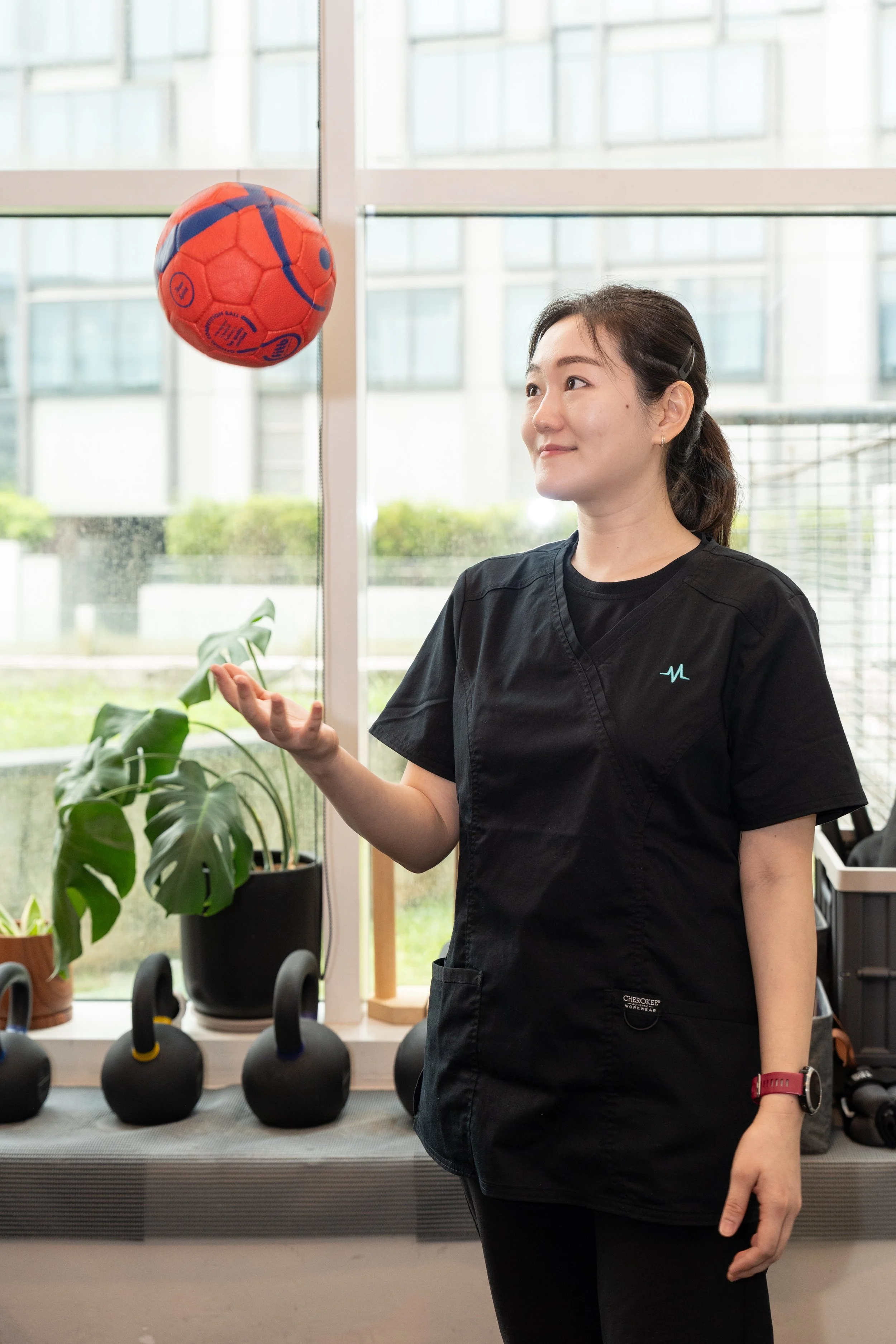
Josephine Lim Fen Ru — Principal Physiotherapist
Josephine Lim Fen Ru has more than 15 years of clinical experience and holds a Master of Clinical Physiotherapy (Sports) from Curtin University.
Before joining MoveMed, she was a Principal Physiotherapist at Singapore General Hospital, where she led its Sports Physiotherapy and Camden Musculoskeletal Physiotherapy teams.
Her experience extends from recreational athletes to elite sport. Josephine served as Physiotherapist-in-Charge for Team Singapore's table tennis, tennis, boxing and kickboxing teams at the 2022 Southeast Asian Games.
Her clinical areas include sports injuries, ACL and ligament rehabilitation, meniscus and cartilage repair, ankle reconstruction and return to sport.
Should I See a Sports Physio or a Doctor?
Many private physiotherapy clinics in Singapore allow patients to book a physiotherapy assessment directly without first obtaining a doctor's referral. At MoveMed patients can book directly, although a physiotherapist may recommend medical review or imaging where appropriate.
You should seek appropriate medical attention rather than simply continuing sport if you have symptoms such as a suspected fracture or dislocation, significant trauma, or other symptoms suggesting a condition requiring urgent medical assessment.
If you are uncertain, our physiotherapists can assess your presentation and advise whether further medical investigation is appropriate.
When Is the Right Time to Book?
You do not necessarily have to wait until pain becomes severe.
For active individuals, understanding why a particular activity is causing difficulty and what needs to be restored before returning to it can be more useful than repeatedly stopping and restarting exercise.
Sports Physiotherapy in Singapore at MoveMed
MoveMed Physiotherapy provides sports and exercise rehabilitation for recreationally active individuals and athletes in Singapore.
Assessment and rehabilitation are tailored to the person's injury, current physical capacity and the activity they want to return to.
If you are dealing with a sports injury, recurring pain during exercise or uncertainty about returning to training, a physiotherapy assessment can help establish where you are now and what needs to happen next.
About MoveMed Physiotherapy Singapore
At MoveMed, we support your recovery through purposeful movement.
Our professionally trained physiotherapists at Novena and Orchard provide tailored sessions in a well-equipped facility—featuring treatment beds, shockwave therapy machines and more —to help you regain strength, mobility, and confidence.
Whether it’s pre-op rehab, pain management or post-op rehab, our team is here to guide your journey every step of the way.
📍(Orchard) Movemed Physiotherapy, 391B Orchard Road Ngee Ann City Office Tower B. #25-03 Singapore 238874
📍(Novena) MoveMed Physiotherapy, 10 Sinaran Dr, #09-04, Novena Medical Center, Singapore 307506
🌐www.movemedsg.com
📞 Call / WhatsApp: +65 9627 2000
📧 Email: hello@movemedsg.com
