
Neck Conditions
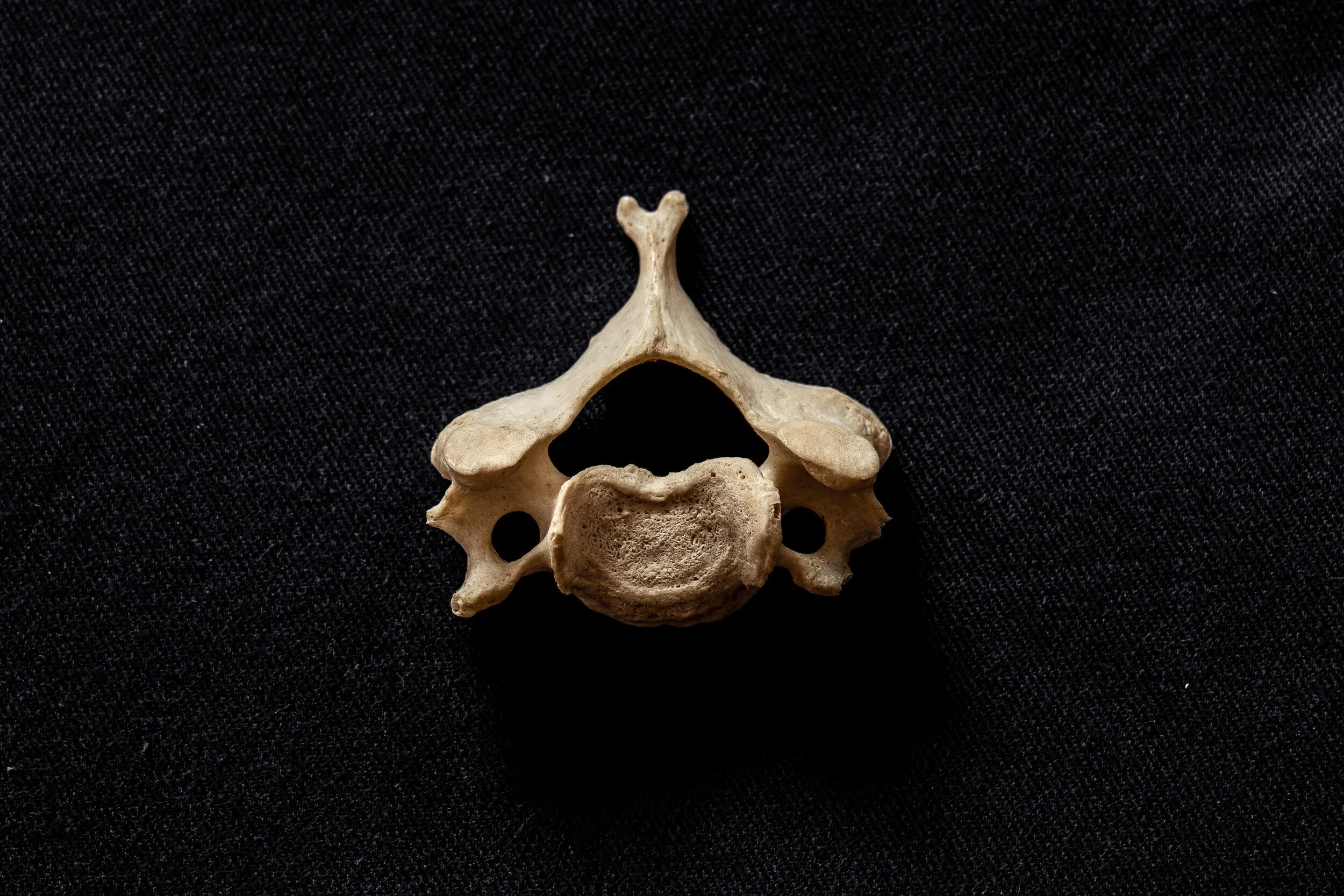
Superior view of a cervical (neck) vertebrae.
-
Compression or irritation of nerve roots in the cervical spine, commonly caused by herniated discs, bone spurs, or narrowing of the spinal canal, resulting in pain, weakness, and numbness.
-
A disc functions similarly to a shock absorber, but with time, it may experience wear or damage. Signs of an injury related to a disc could manifest as reduced neck mobility, tingling extending into the shoulder or arm, and weakness in the neck.
-
Overuse or sudden, forceful movement leading to microscopic tears in the neck muscles, often due to poor posture, repetitive motions, or excessive stress on the neck.
-
Chronic muscle tension in the neck and shoulders, often related to stress, poor posture, or prolonged use of electronic devices, leading to headache and neck pain.
-
Caused by abrupt, forceful back-and-forth movement of the neck, often due to car accidents, leading to strain or injury in the soft tissues, ligaments, and muscles of the neck.
-
Progressive degeneration of the cervical spine due to aging, leading to wear and tear of intervertebral discs and the formation of bone spurs, resulting in pain and stiffness.
Neck Recovery Guides
Explore related guides on neck pain, cervical conditions, rehabilitation and physiotherapy support.