
Ankle & Foot Conditions
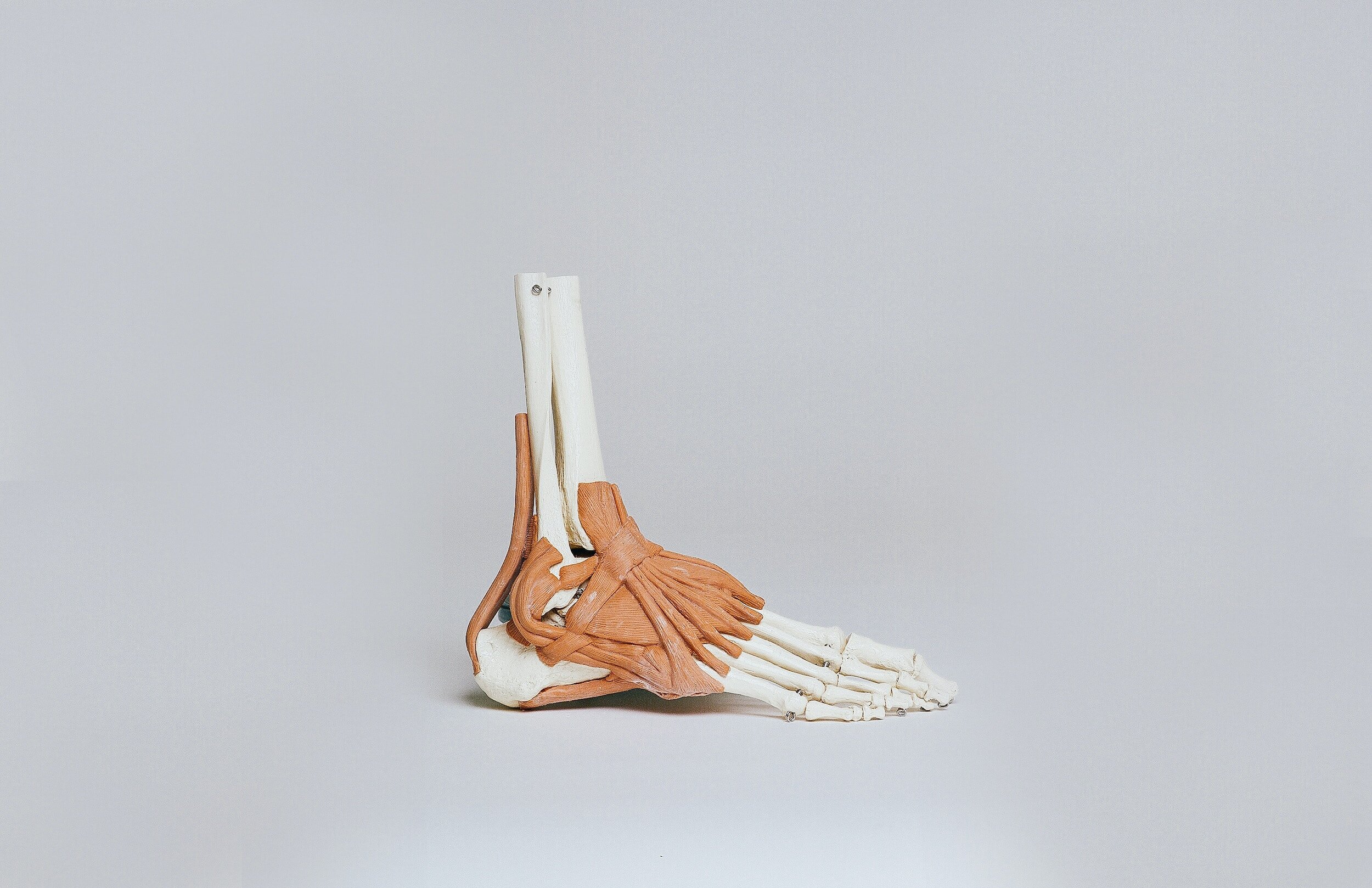
Anatomy model of an ankle
-
A common foot condition characterized by severe heel pain, typically experienced in the morning or after periods of inactivity.
Caused by inflammation of the thick tissue connecting the heel bone to the toes, known as the plantar fascia.
Symptoms
Sharp heel pain, especially with the first steps in the morning
Pain after prolonged sitting or periods of inactivity
Tenderness at the bottom of the heel
Pain that improves with movement but may return after activity
Treatment
Physiotherapy to reduce inflammation and improve foot mechanics
Stretching of the plantar fascia and calf muscles
Strengthening exercises to support the foot and ankle
Load management and footwear advice to reduce strain
-
A condition where the arches of the feet are abnormally low or absent (collapsed), leading to increased pressure and discomfort, particularly when standing or walking.
It can be a congenital or acquired condition and may result in foot pain and altered gait mechanics.
Symptoms
Low or absent foot arch (flat appearance)
Foot pain or fatigue with prolonged standing or walking
Heel, arch, or ankle discomfort
Altered walking pattern or reduced foot stability
Treatment
Physiotherapy to improve foot strength and support
Strengthening of the foot and ankle muscles
Movement and gait correction to reduce strain
Footwear or orthotic advice where needed
-
Involves the inflammation or degeneration of the posterior tibialis tendon, which runs along the inner side of the ankle.
It can lead to pain, swelling, and collapsing of the foot's arch, impacting mobility and stability, particularly during walking and other weight-bearing activities.
Symptoms
Pain along the inner ankle or arch of the foot
Swelling or tenderness on the inner side of the ankle
Flattening of the foot arch over time
Pain worsens with walking, standing, or weight-bearing
Treatment
Physiotherapy to reduce tendon irritation and restore function
Strengthening of the foot and ankle muscles to support the arch
Load management to reduce strain during activity
Footwear or orthotic support where needed
-
A painful condition affecting the Achilles tendon, which connects the calf muscles to the heel bone.
It causes discomfort, swelling, and reduced function, often as a result of overuse, improper footwear, or biomechanical issues.
Symptoms
Pain at the back of the heel or along the Achilles tendon
Stiffness, especially in the morning or at the start of activity
Swelling or thickening of the tendon
Pain worsens with running, walking, or pushing off the foot
Treatment
Physiotherapy to reduce tendon irritation and promote healing
Progressive strengthening of the calf muscles
Load management to control stress on the tendon
Footwear advice to support recovery and reduce strain
-
A sudden and often painful injury to the Achilles tendon.
It occurs when the tendon is partially or completely torn, typically due to a forceful movement or overexertion.
This injury can result in a distinct popping sound, severe pain, swelling, and difficulty putting pressure on your toes.
Symptoms
Sudden sharp pain at the back of the ankle or calf
A “popping” sensation at the time of injury
Swelling and difficulty walking
Inability to push off the foot or stand on tiptoe
Treatment
Urgent medical assessment to confirm severity
Surgical repair or conservative management depending on the tear
Physiotherapy to restore strength, mobility, and function after immobilisation
Gradual return to walking and activity with guided rehabilitation
-
A bunion is a painful deformity of the big toe joint, where the big toe has caved inwards.
Depending on the severity of the deformity, patients may either use a toe splint, accompanied by exercises.
Or opt for surgery, medically known as a bunionectomy or hallux valgus correction.
During this surgery, the surgeon realigns the bones, removes excess tissue, and often inserts screws or pins to stabilize the joint.
Symptoms
Bony bump at the base of the big toe (toe angled inward)
Pain, swelling, or redness around the joint
Discomfort with footwear or prolonged walking
Reduced toe movement or pressure-related pain
Treatment
Physiotherapy to reduce pain and improve foot mechanics
Footwear modification and offloading to reduce pressure
Exercises to support toe alignment and mobility
Surgical correction (bunionectomy) in more severe cases
Post-surgical rehabilitation to restore movement and function
-
A specific type of foot injury that involves the bones and ligaments in the mid-foot area.
Typically caused by trauma, such as a fall.
Symptoms
Pain in the midfoot, especially with standing or walking
Swelling and bruising over the top or bottom of the foot
Difficulty bearing weight or pushing off the foot
Feeling of instability in the midfoot
Treatment
Urgent medical assessment to rule out fracture or instability
Immobilisation or surgical management depending on severity
Physiotherapy to restore mobility, strength, and foot stability after healing
Gradual return to weight-bearing and activity
-
A condition where the ankle joint is prone to giving way or experiencing recurrent episodes of rolling, especially during weight-bearing activities.
Instability is often the result of previous ankle sprains or injuries that have weakened the supporting ligaments and structures.
Symptoms
Ankle feels unstable or “gives way,” especially during walking or sport
Recurrent ankle sprains or rolling episodes
Pain, swelling, or tenderness around the ankle
Reduced confidence or control during weight-bearing activities
Treatment
Physiotherapy to restore ankle stability and control
Strengthening of the ankle and lower limb muscles
Balance and proprioception training to prevent re-injury
Support (e.g. taping or bracing) if needed during recovery
-
Also known as Medial Tibial stress Syndrome, is a common lower leg condition characterized by pain along the inner edge of the shinbone (tibia).
It typically occurs in individuals who engage in repetitive impact activities such as running, jumping, or dancing.
Shin splints result from overuse, leading to inflammation of the muscles, tendons, and periosteum (outer covering of the bone) of the shin.
Symptoms
Pain along the inner edge of the shin (tibia)
Pain worsens with running, jumping, or impact activities
Tenderness along the shinbone
Discomfort that improves with rest but returns with activity
Treatment
Physiotherapy to reduce inflammation and address underlying causes
Load management to reduce repetitive impact stress
Strengthening of the lower limb to improve shock absorption
Footwear and running mechanics assessment
-
Lateral Ankle Sprain: This is the most common type and involves the tearing or stretching of the lateral (outside) ligaments of the ankle. It includes:
Anterior Talofibular Ligament (ATFL) Tear
Calcaneofibular Ligament (CFL) Tear
Posterior Talofibular Ligament (PTFL) Tear
Medial Ankle Sprain: Less common than lateral sprains, this involves injury to the ligaments on the inner side of the ankle. It includes:
Deltoid Ligament Tear: The deltoid ligament is a complex of several ligaments on the medial side of the ankle.
High Ankle Sprain (Syndesmotic Sprain): This type involves the syndesmotic ligaments that connect the tibia and fibula (the two bones in the lower leg).
Symptoms
Pain and swelling around the ankle (outer, inner, or above the ankle joint)
Bruising and tenderness after a twist or fall
Difficulty bearing weight or walking
Feeling of instability or the ankle “giving way”
Treatment
Physiotherapy to reduce pain and restore ankle stability
Strengthening and balance training to prevent re-injury
Gradual return to walking and sport with proper load management
Support (e.g. taping or bracing) during recovery
Further assessment for severe or high ankle sprains
-
These are the common ankle surgeries that we help patients bounce back from:
Ankle Arthroscopy
ATFL and CFL reconstruction
Achilles Tendon Repair
Ankle Fracture Surgery
Ankle Synovectomy
Symptoms
Post-surgical pain, swelling, or stiffness
Reduced ankle mobility and strength
Difficulty walking, weight-bearing, or returning to activity
Reduced confidence or fear of re-injury
Treatment
Structured physiotherapy to restore movement and function
Progressive strengthening of the ankle and lower limb
Balance and stability training to prevent re-injury
Guided return to walking, sport, and daily activities
Related Foot & Ankle Resources
Explore related guides on heel pain, plantar fasciitis, rehabilitation and physiotherapy support.