
Back Pain in Singapore: Procedures and Physiotherapy
Back Pain in Singapore: Procedures and Physiotherapy
Back Muscle Strain
What it is:
A back muscle strain occurs when the muscles or soft tissues around the spine are overloaded, overstretched, or irritated. This may happen after lifting, sudden twisting, intense exercise, or prolonged awkward posture.
Common symptoms:
- Aching or sharp pain in the lower back
- Stiffness when bending or standing up
- Muscle tightness or spasms
- Pain that worsens with certain movements
Recovery:
- Gentle movement and activity modification
- Progressive mobility and strengthening exercises
- Manual therapy where appropriate
- Gradual return to lifting, exercise, and daily activities

Cubital Tunnel Release
Disc-Related Back Pain
What it is:
Disc-related back pain may occur when the spinal discs become irritated, bulge, or place pressure on surrounding structures. Not every disc bulge causes pain, but some may contribute to back pain or nerve-related symptoms.
Common symptoms:
- Lower back pain that may worsen with sitting or bending
- Pain spreading into the buttock or leg
- Possible tingling, numbness, or weakness
- Difficulty with prolonged sitting, lifting, or forward bending
Recovery:
- Education on safe movement and symptom triggers
- Progressive core and hip strengthening
- Gradual exposure to bending and lifting
- Referral for further medical review if symptoms worsen or neurological signs are present
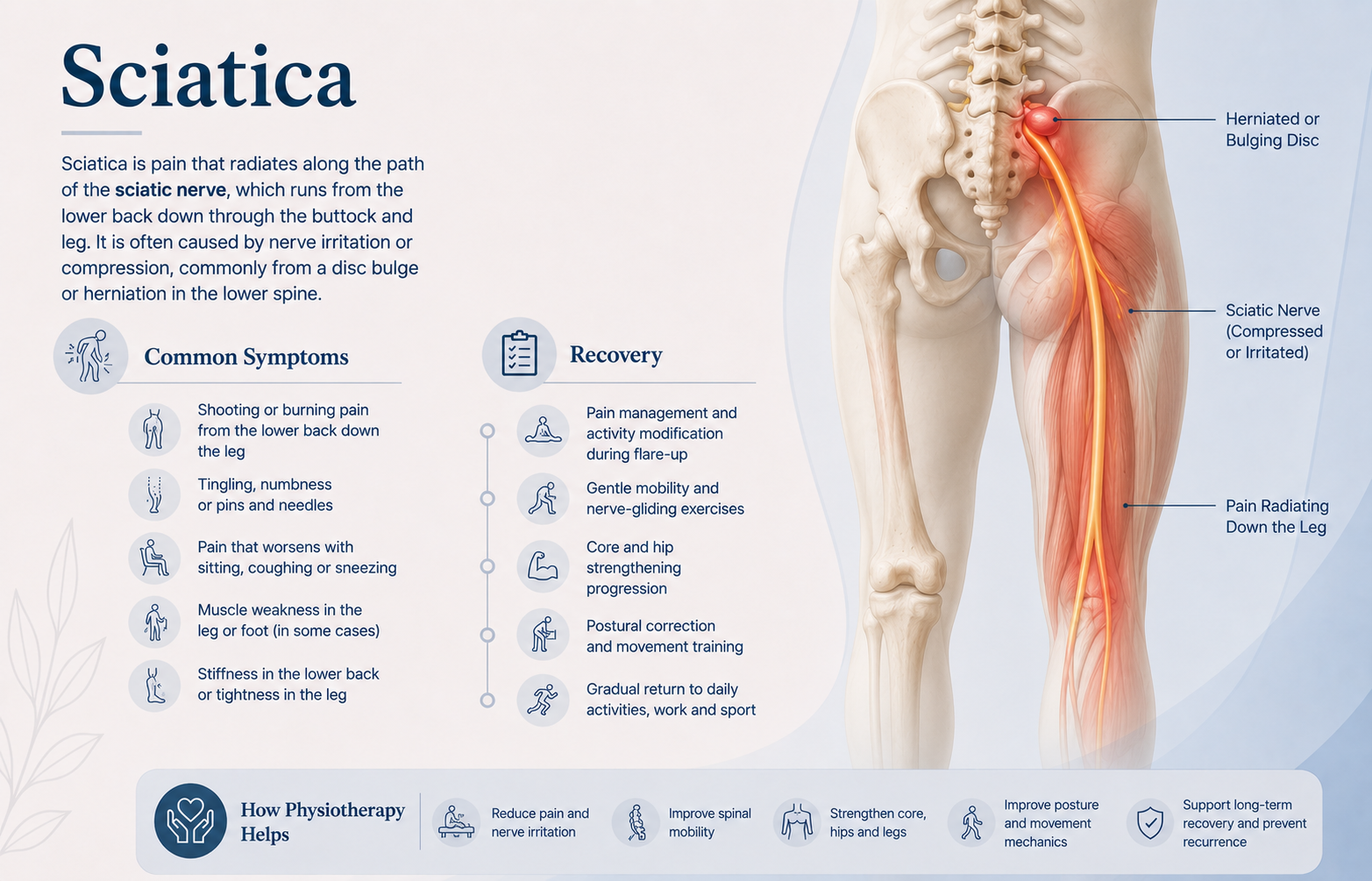
Sciatica
Sciatica
What it is:
Sciatica refers to nerve-related pain that travels from the lower back or buttock down the leg. It may be linked to irritation or compression of the sciatic nerve or nerve roots in the lower spine.
Common symptoms:
- Shooting, burning, or electric-like pain down the leg
- Numbness or tingling in the leg or foot
- Pain aggravated by sitting, coughing, or bending
- Possible weakness in the leg or foot
Recovery:
- Assessment of nerve sensitivity and movement tolerance
- Gentle mobility and nerve-gliding exercises where suitable
- Strengthening to support the spine and hips
- Monitoring of symptoms to ensure safe progression
Plantar Fascia Release
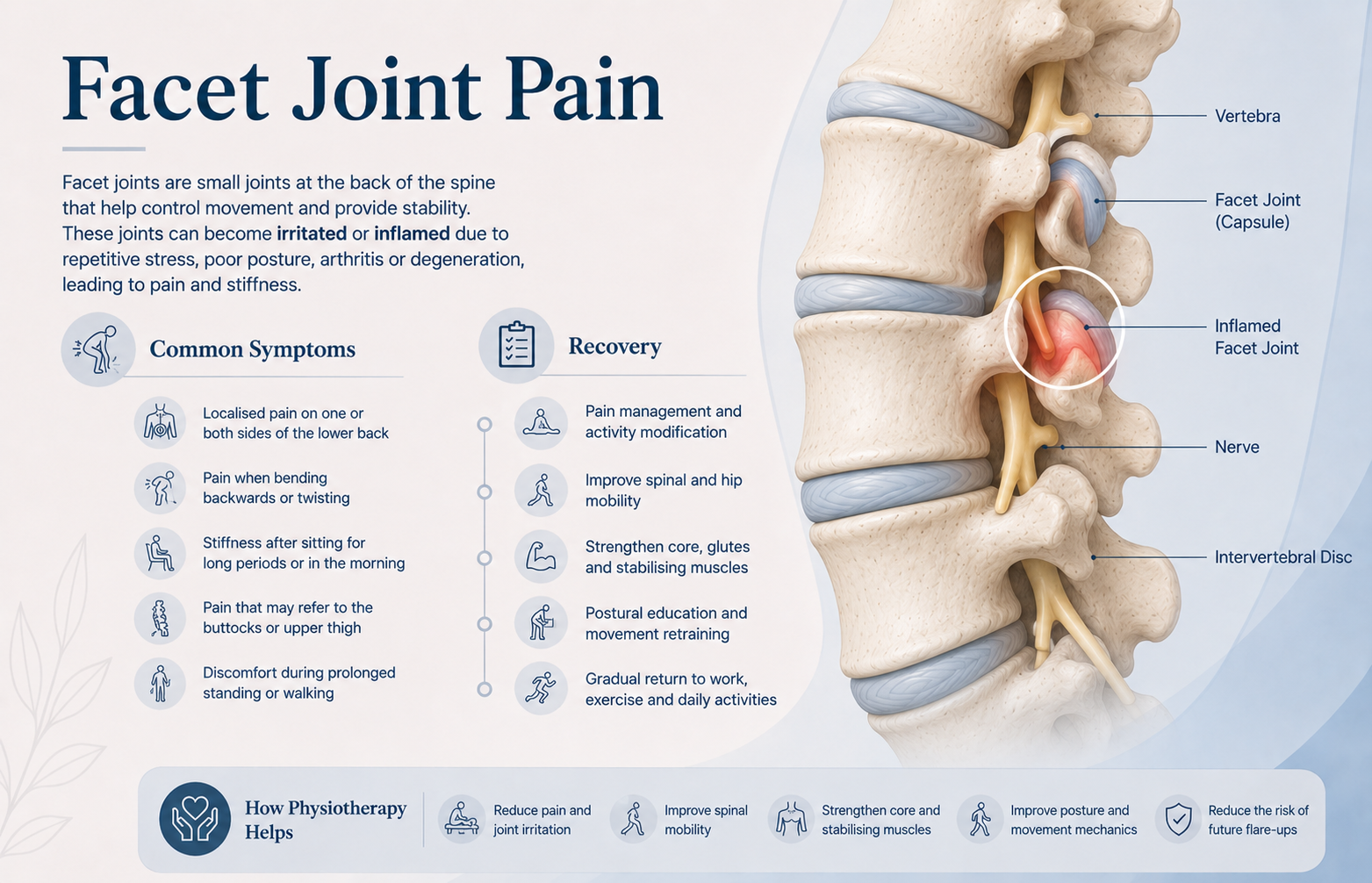
Facet Joint Pain
What it is:
Facet joints are small joints at the back of the spine that help guide movement. They may become irritated through repetitive extension, rotation, stiffness, or age-related changes.
Common symptoms:
- Localised pain on one or both sides of the lower back
- Pain with arching backwards or twisting
- Morning stiffness or stiffness after prolonged sitting
- Pain that may improve with gentle movement
Recovery:
- Mobility exercises for the spine and hips
- Strengthening of trunk and glute muscles
- Postural and movement retraining
- Manual therapy to improve movement where appropriate
Postural Back Pain
What it is:
Postural back pain often develops from prolonged sitting, desk work, repeated bending, or sustained positions. It is common among office workers, students, drivers, and people who spend long hours at a computer.
Common symptoms:
- Dull ache across the lower or mid back
- Stiffness after sitting for long periods
- Pain that improves with walking or changing position
- Tension around the hips, back, or shoulders
Recovery:
- Movement breaks and ergonomic adjustments
- Mobility work for the spine and hips
- Strengthening exercises for postural endurance
- Building sustainable daily movement habits
Sports-Related Back Pain
What it is:
Sports-related back pain may occur from repetitive loading, poor movement control, insufficient strength, fatigue, or sudden increases in training intensity. It is commonly seen in gym training, running, golf, football, racket sports, and combat sports.
Common symptoms:
- Pain during lifting, running, jumping, or twisting
- Stiffness after training
- Reduced performance or confidence with movement
- Pain that returns when training load increases
Recovery:
- Load management and technique review
- Progressive strengthening of the trunk, hips, and legs
- Sport-specific movement retraining
- Gradual return to training or competition
When to Seek Medical Attention
Most back pain is not caused by a serious medical condition. However, you should seek medical attention promptly if you experience:
- Loss of bladder or bowel control
- Numbness around the groin or saddle area
- Progressive leg weakness
- Severe pain after a fall, accident, or trauma
- Unexplained fever, weight loss, or night pain
- Back pain with a known history of cancer or major illness
How Physiotherapy Helps Back Pain
Back pain recovery is not only about reducing pain. A good rehabilitation plan also helps identify why the pain started, what movements are currently sensitive, and how to rebuild confidence with daily activity, exercise, and work demands.
Physiotherapy helps to:
- Assess movement, strength, mobility, and pain triggers
- Reduce stiffness and improve spinal and hip mobility
- Build core, glute, and lower limb strength
- Improve lifting, sitting, walking, and exercise mechanics
- Guide safe return to work, gym, sport, and daily routines
- Reduce the risk of recurring flare-ups through long-term self-management
At MoveMed, physiotherapy programmes are tailored to each individual’s symptoms, lifestyle, work demands, fitness level, and recovery goals. Whether your back pain is recent, recurring, or linked to sport or prolonged sitting, our team can guide you through a structured plan to restore movement, strength, and confidence.
About MoveMed Physiotherapy Singapore
At MoveMed, we support your recovery through purposeful movement.
Our professionally trained physiotherapists at Novena and Orchard provide tailored sessions in a well-equipped facility—featuring treatment beds, shockwave therapy machines and more —to help you regain strength, mobility, and confidence.
Whether it’s pre-op rehab, pain management or post-op rehab, our team is here to guide your journey every step of the way.
📍(Orchard) Movemed Physiotherapy, 391B Orchard Road Ngee Ann City Office Tower B. #25-03 Singapore 238874
📍(Novena) MoveMed Physiotherapy, 10 Sinaran Dr, #09-04, Novena Medical Center, Singapore 307506
🌐www.movemedsg.com
📞 Call / WhatsApp: +65 9627 2000
📧 Email: hello@movemedsg.com
