
What Is Gait Training Physiotherapy and Who Needs It?
What Is Gait Training Physiotherapy and Who Needs It?
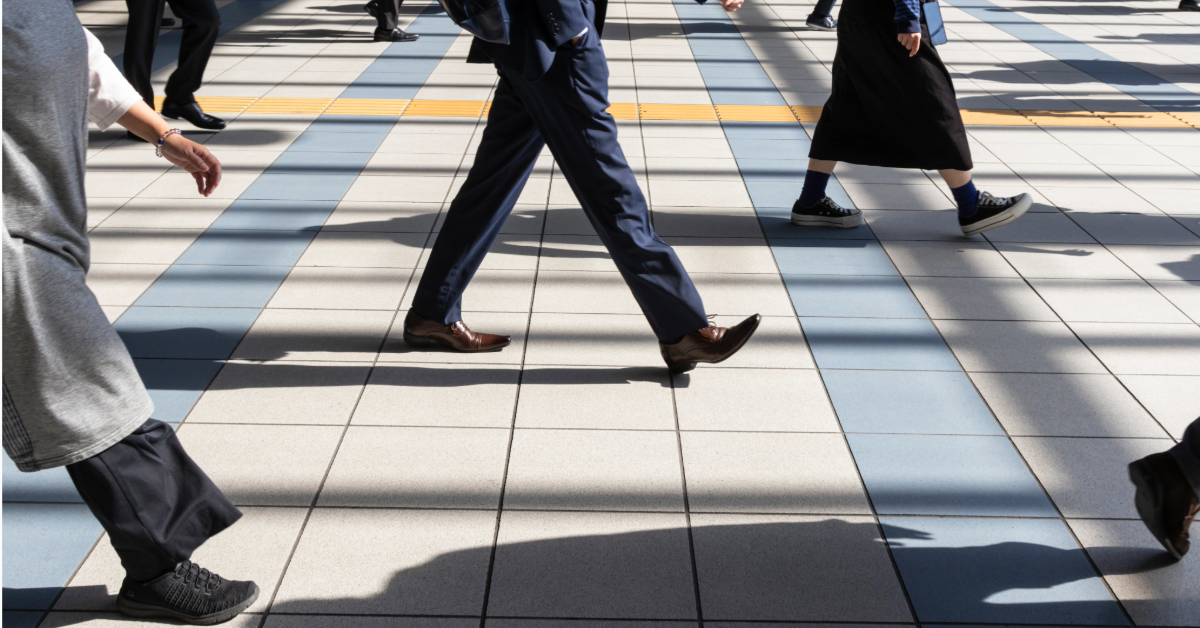
Walking can change after an injury, surgery or period of reduced activity. You may begin taking shorter steps, favouring one leg or developing a limp without consciously trying to do so.
Gait training physiotherapy helps identify why your walking pattern has changed and progressively rebuilds the mobility, strength, balance and movement control needed for more comfortable and efficient walking.
Quick Summary: What Gait Training Looks At
What Does “Gait” Mean?
Gait simply means the way you walk.
Walking involves more than moving one foot in front of the other. Your hips, knees and ankles need sufficient mobility, your muscles must produce and control force, and your body has to maintain balance as your weight moves from one side to the other.
Changes in step length, walking speed, weight distribution or hip and knee movement can be much subtler.
Why Does Walking Change After an Injury?
The body naturally tries to protect a painful, stiff or weakened area. Someone with knee pain may spend less time on the affected leg, while a person recovering from ankle surgery may shorten their step because the ankle cannot yet move normally.
These compensations can be useful early in recovery. The issue is when they remain after the original injury has improved.
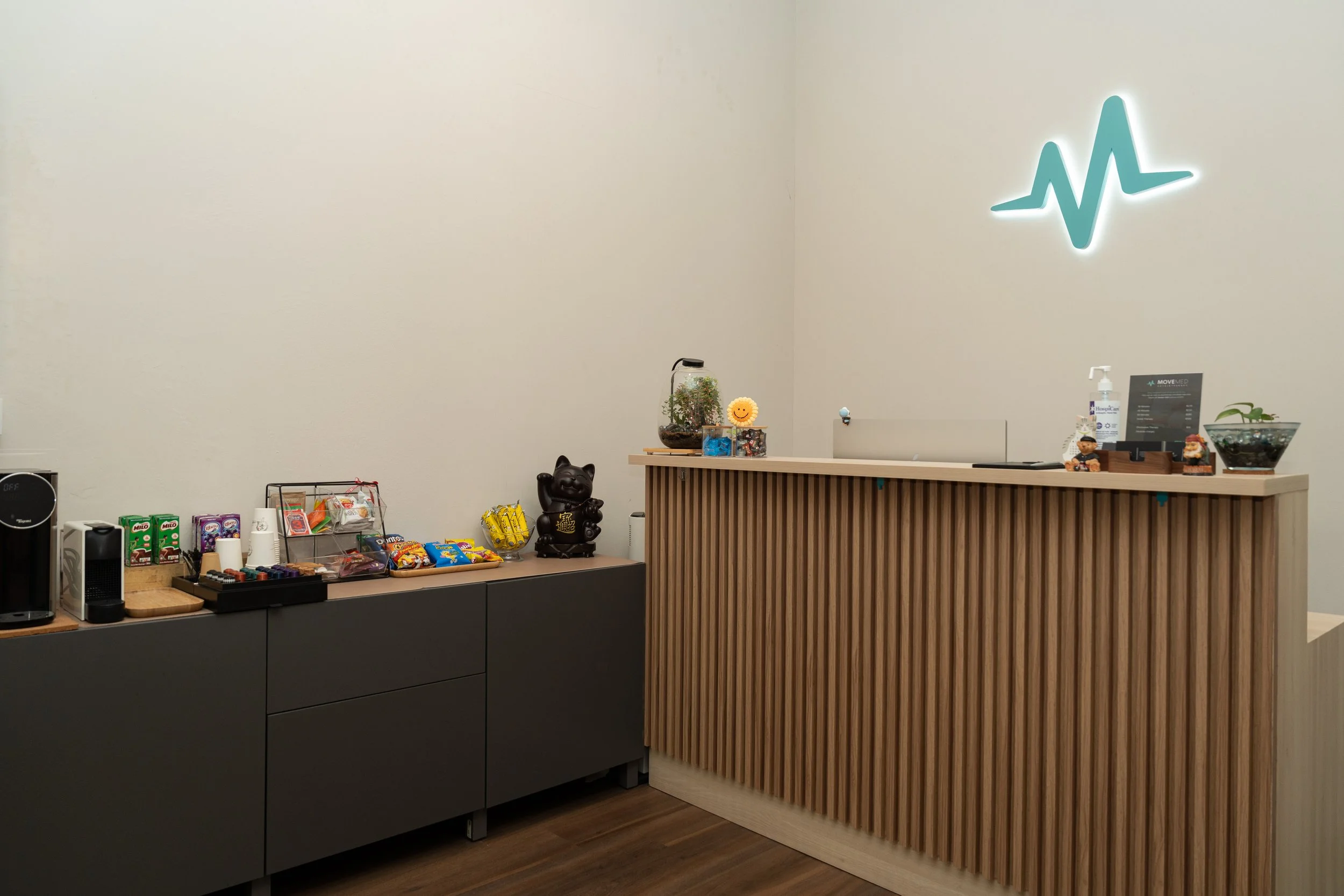
Movemed Physiotherapy Novena Clinic
What Happens During Gait Training?
A physiotherapist first looks for the reason behind the altered walking pattern rather than simply asking you to “walk normally”.
Walking, joint mobility, muscle strength, balance and movement control are assessed.
Limitations such as ankle stiffness, weakness or poor balance are addressed.
Weight transfer, step length, foot placement and walking speed are progressively practised.
The Same Limp Can Have Different Causes
Example 1:
Limited ankle mobility → difficulty moving over the foot → shorter step.
Example 2:
Weak hip muscles → reduced control on one leg → altered pelvic movement.
The walking pattern may look similar, but the rehabilitation required can be very different.
Who May Benefit From Gait Training?
After lower-limb surgery
Knee, hip, ankle or foot surgery may temporarily change weight-bearing and walking.
After injury
An ankle sprain, knee injury, fracture or muscle injury can create compensatory movement.
Persistent limping
A limp may reflect pain, stiffness, weakness, poor balance or reduced confidence.
After reduced mobility
Time away from normal walking can reduce strength, coordination and confidence.
Returning to running or sport
Walking control can form an earlier stage before progressing towards higher-impact activity.
Is Gait Training Just Practising Walking?
Not necessarily. Walking more does not automatically correct the reason the walking pattern changed.
If an ankle remains stiff, for example, walking another kilometre may simply mean practising the same shortened-step compensation for longer.
The walking pattern + the physical reason it changed.
When Should You Get Your Walking Assessed?
Consider a physiotherapy assessment if a change in walking persists after an injury or surgery, particularly if you notice:
- Persistent limping
- Avoiding weight through one leg
- Uneven or shortened steps
- Pain while walking
- Poor balance or instability
- Difficulty with stairs or longer distances
- Difficulty progressing back to running or sport
Gait Training at MoveMed
At MoveMed, gait training can form part of a broader functional rehabilitation programme.
The aim is to identify what is limiting your movement first, then progressively address mobility, strength, balance and walking mechanics according to your recovery stage.
The goal may be walking comfortably after surgery, returning to daily activity, or progressing towards running, gym training or sport.
About MoveMed Physiotherapy Singapore
At MoveMed, we support your recovery through purposeful movement.
Our professionally trained physiotherapists at Novena and Orchard provide tailored sessions in a well-equipped facility—featuring treatment beds, shockwave therapy machines and more —to help you regain strength, mobility, and confidence.
Whether it’s pre-op rehab, pain management or post-op rehab, our team is here to guide your journey every step of the way.
📍(Orchard) Movemed Physiotherapy, 391B Orchard Road Ngee Ann City Office Tower B. #25-03 Singapore 238874
📍(Novena) MoveMed Physiotherapy, 10 Sinaran Dr, #09-04, Novena Medical Center, Singapore 307506
🌐www.movemedsg.com
📞 Call / WhatsApp: +65 9627 2000
📧 Email: hello@movemedsg.com
