
What Happens During Your First Physiotherapy Session?

Do i need MRI before Physiotherapy
What Happens During Your First Physiotherapy Session?
Booking your first physiotherapy appointment can feel slightly uncertain, especially if you have never attended physiotherapy before.
You may be wondering whether treatment begins immediately, whether you need to bring scans or medical reports, what your physiotherapist will ask, and whether the first session will involve exercises, manual treatment or simply an assessment.
In most cases, the first physiotherapy session is a combination of understanding your problem, assessing how you move, identifying possible contributing factors, and beginning an appropriate treatment or rehabilitation plan.
Here is what you can generally expect.
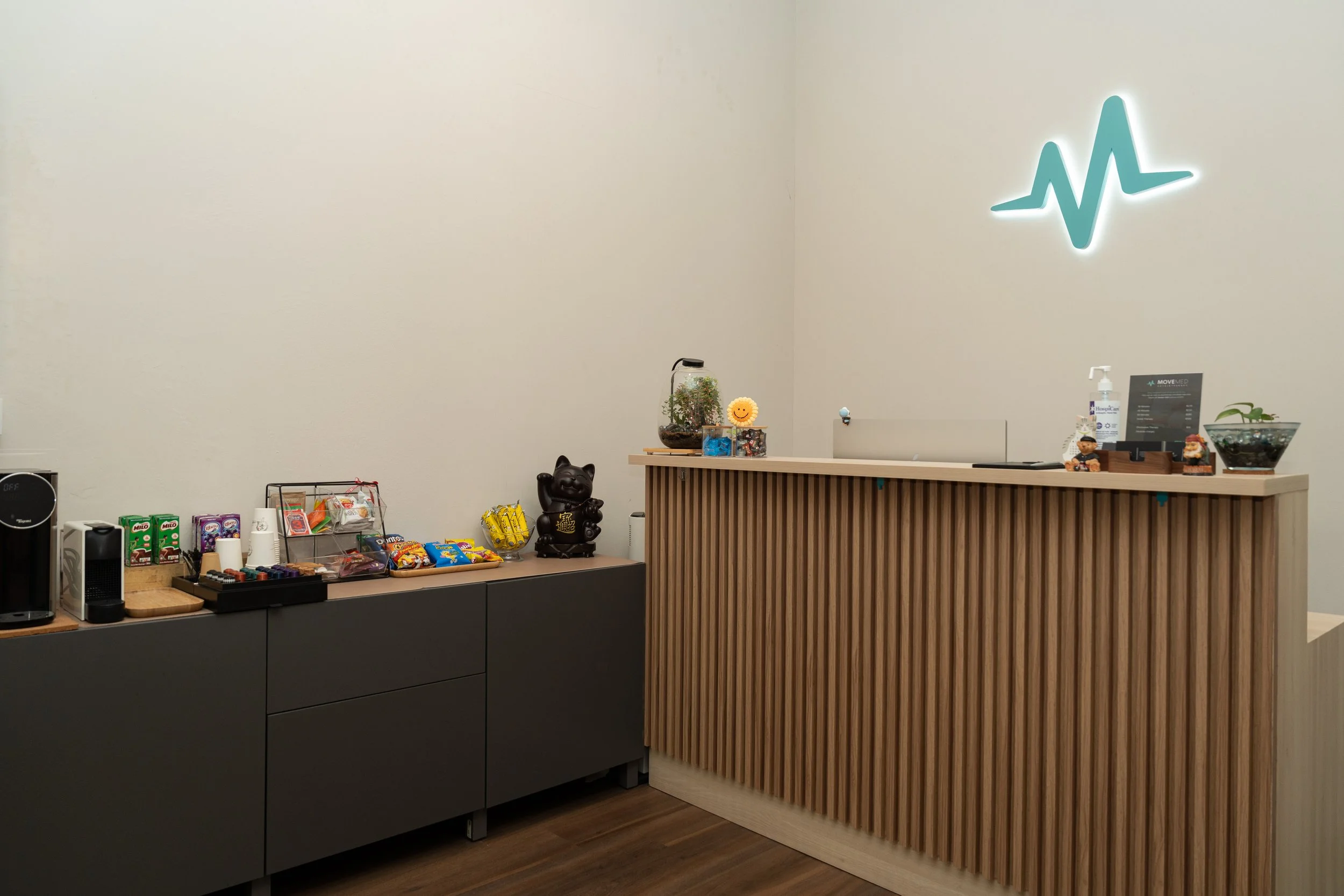
Movemed Physiotherapy Novena Clinic
1. Your Physiotherapist Will First Understand Why You Are There
The first part of the session usually begins with a conversation.
Your physiotherapist will want to understand what brought you in, what symptoms you are experiencing, and how those symptoms are affecting your everyday activities.
Common questions may include:
- When did the pain or injury begin?
- Was there a specific incident that caused it?
- Where exactly do you feel the symptoms?
- What movements make the problem better or worse?
- Does it affect walking, running, work, sleep or sport?
- Have you experienced this problem before?
- Have you already seen a doctor or had imaging performed?
- What would you like to return to doing?
These questions help the physiotherapist understand the injury and how it affects your daily life so they can decide what rehabilitation procedures are best for you.
2. Your Medical and Injury History May Be Reviewed
Physiotherapy assessment does not look only at the painful area. We may also ask about previous injuries, operations, medical conditions, medications and other factors that could influence your recovery.
For example, someone seeking help for knee pain may have had a previous ankle injury that changed the way they walk, or a previous knee surgery that affects current movement.
Not necessarily. If you already have imaging, reports or a referral letter, bringing them can provide useful additional information. However, physiotherapy assessment is often based heavily on your symptoms, movement, strength and physical examination rather than imaging alone.
3. The Physiotherapist Will Observe How You Move
After discussing your symptoms, the session usually moves into the physical assessment.
The exact assessment depends on the reason for your visit. A physiotherapist may look at a list of behaviours such as how you stand, how you walk, muscle strength, and so on.
If you are a runner, for example, assessment may eventually include running mechanics. If your problem affects your shoulder, your physiotherapist may look at how the shoulder, shoulder blade and upper body move together.
4. Range of Motion, Strength and Specific Tests May Be Checked
The physiotherapist may then perform more targeted tests.
These can include measuring how far a joint moves, comparing strength between sides, checking whether particular movements reproduce symptoms and testing different structures around the painful area.
The aim is not simply to find where it hurts.
The goal is to understand which physical limitations may be contributing to the problem and which areas should become priorities during rehabilitation.

5. Treatment May Begin During the First Session
In many cases, the first appointment is not purely an assessment.
If appropriate, treatment can begin during the same session.
Depending on your condition and assessment findings, this might include:
- guided exercises,
- mobility work,
- strengthening exercises,
- manual therapy,
- movement retraining,
- education about pain or activity management,
- or advice on modifying activities temporarily.
Certain treatment modalities or equipment may also be considered where appropriate, depending on your condition and rehabilitation plan.
6. You May Be Given Exercises to Continue at Home
Physiotherapy does not usually stop when the appointment ends.
Your physiotherapist may give you a small number of exercises or movement tasks to perform between sessions.
These are normally chosen according to what was identified during the assessment.
Early exercises may focus on goals such as restoring movement, improving strength, reducing sensitivity or rebuilding confidence in a particular movement.
As your rehabilitation progresses, these exercises can become more demanding and more specific to the activities you want to return to.
7. You Should Leave With a Clearer Rehabilitation Plan
One of the most important outcomes of the first physiotherapy appointment is understanding what happens next.
Your physiotherapist may discuss:
- the main goals of treatment,
- what you should work on between appointments,
- activities you may need to modify temporarily,
- how progress will be monitored,
- and when another physiotherapy session may be useful.
The number of sessions required varies significantly between people.
A relatively minor problem may require only a small number of appointments, while rehabilitation following surgery or a significant injury may take considerably longer.
What Should You Bring to Your First Physiotherapy Appointment?
In most situations, you do not need to prepare extensively.
However, it can be useful to bring:
- any relevant medical reports,
- MRI or X-ray reports if available,
- a list of medications if relevant,
- a referral letter if you have one,
- and clothing that allows the affected area to move comfortably.
If your problem is related to running or sport, your physiotherapist may also ask you to bring the shoes or equipment you normally use.
Will Physiotherapy Hurt?
Physiotherapy assessment may involve movements that reproduce some of your symptoms because the physiotherapist needs to understand what triggers them.
However, the objective is not simply to push through pain.
Your physiotherapist can adjust the assessment or exercises based on your symptoms, comfort level and the stage of your recovery.
It is useful to tell your physiotherapist what you are feeling during the assessment rather than trying to tolerate significant discomfort without saying anything.
What If the Physiotherapist Thinks Something Else Needs Investigation?
Physiotherapists assess whether your symptoms appear appropriate for physiotherapy management.
If the assessment suggests that additional medical investigation may be useful, your physiotherapist may recommend that you speak with a doctor or another healthcare professional.
This is one reason the initial assessment matters: the first appointment is not only about deciding which exercises to perform, but also about determining the most appropriate next step.
What Happens After the First Session?
Your next session will usually build on what was learned during the first appointment.
The physiotherapist may reassess important movements, check how you responded to the initial treatment, progress your exercises and adjust the rehabilitation plan.
Over time, rehabilitation generally moves from restoring basic movement and strength toward more demanding activities related to your goals.
For an office worker, that may mean sitting and moving comfortably throughout the day. For an athlete, it may eventually mean running, jumping, changing direction or returning to competition.
- Discussing your symptoms and goals.
- Reviewing relevant injury and medical history.
- Assessing movement, strength and mobility.
- Performing condition-specific tests where appropriate.
- Explaining the assessment findings.
- Beginning treatment where suitable.
- Providing exercises or advice for between sessions.
- Planning the next stage of rehabilitation.
About MoveMed Physiotherapy Singapore
At MoveMed, we support your recovery through purposeful movement.
Our professionally trained physiotherapists at Novena and Orchard provide tailored sessions in a well-equipped facility—featuring treatment beds, shockwave therapy machines and more —to help you regain strength, mobility, and confidence.
Whether it’s pre-op rehab, pain management or post-op rehab, our team is here to guide your journey every step of the way.
📍(Orchard) Movemed Physiotherapy, 391B Orchard Road Ngee Ann City Office Tower B. #25-03 Singapore 238874
📍(Novena) MoveMed Physiotherapy, 10 Sinaran Dr, #09-04, Novena Medical Center, Singapore 307506
🌐www.movemedsg.com
📞 Call / WhatsApp: +65 9627 2000
📧 Email: hello@movemedsg.com
