
Physiotherapy for Seniors in Singapore
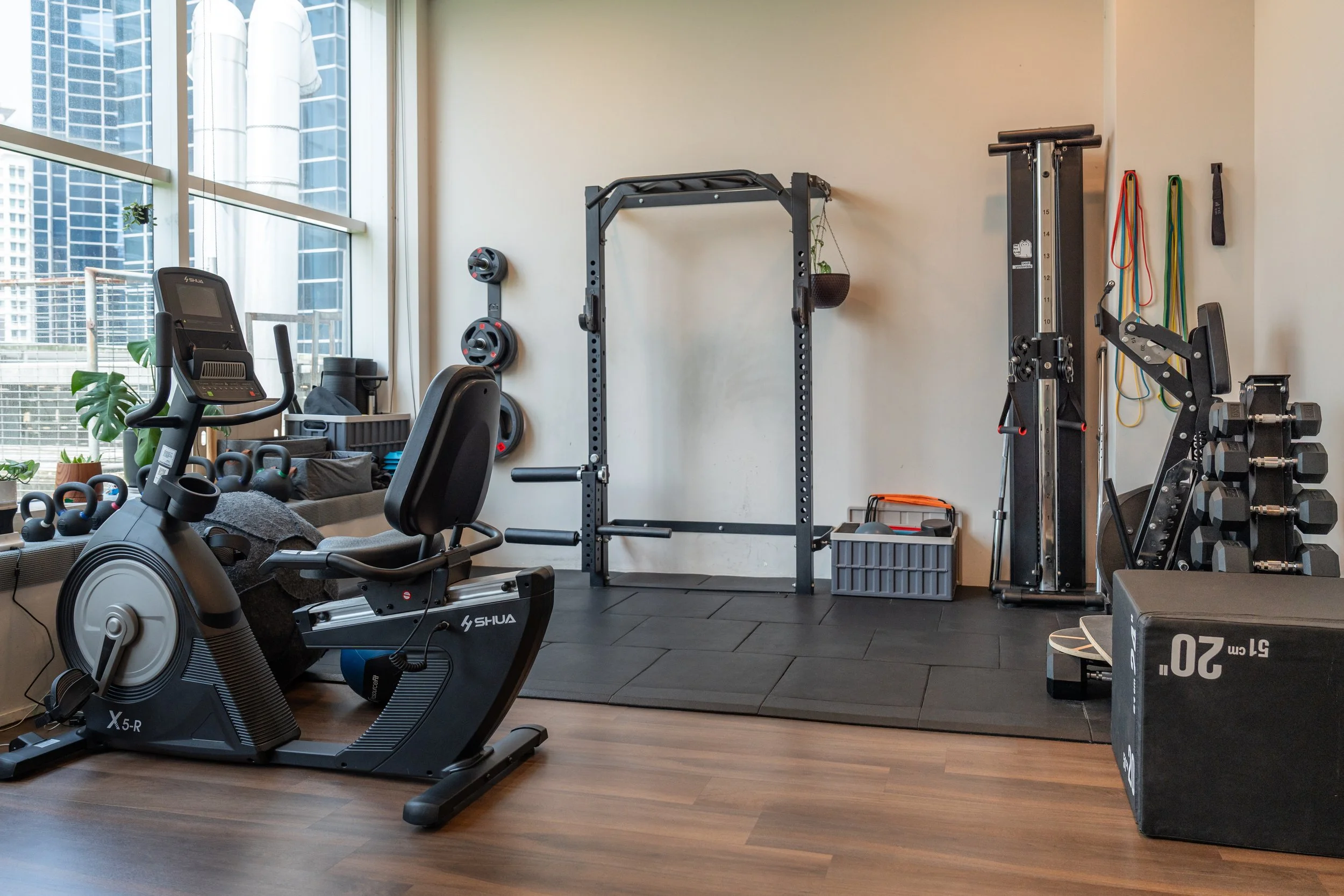
Movemed Singapore Physiotherapy Clinic.jpg
Physiotherapy for Seniors in Singapore: Balance, Mobility and Fall Prevention
A parent starts holding onto furniture when walking across the room. They take longer to get out of a chair, hesitate at kerbs, or avoid going out because they feel unsteady. These changes may seem small, but they are good reasons to assess mobility before a fall occurs.
According to the National University Health System (NUHS), about one-third of people aged 65 and above in Singapore have experienced a fall at least once. NUHS identifies poor balance, an unsteady gait, lower-limb pain and difficulty rising from a chair among the factors that can contribute to falls. NUHS
Physiotherapy addresses the movement problems behind these difficulties.
A physiotherapist can assess how an older adult walks, balances, transfers between sitting and standing, and manages everyday tasks. From there, treatment can focus on the abilities that matter most to that person.
When should an older adult consider physiotherapy?
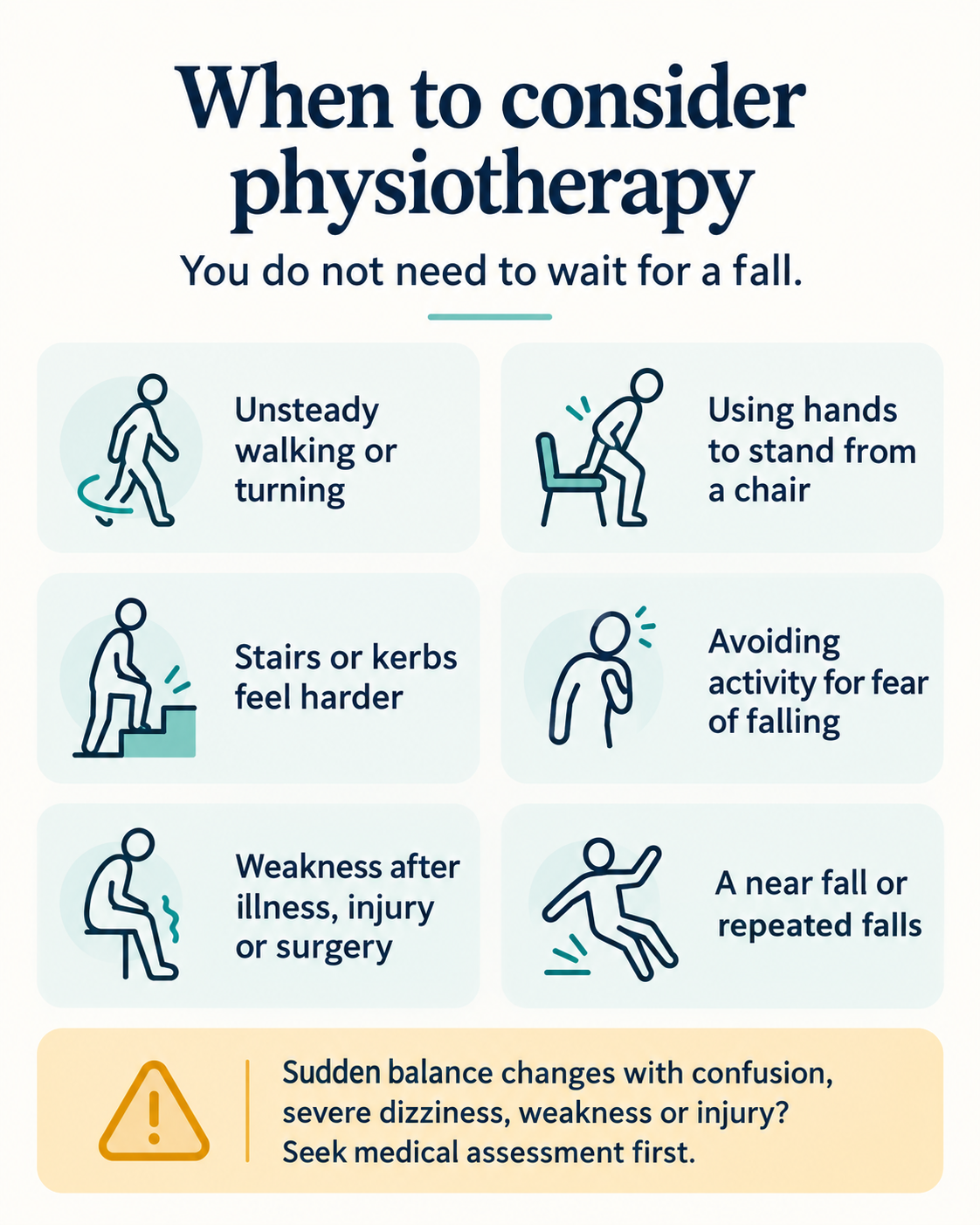
A fall is one reason to seek help, but there is no need to wait for one. An assessment may be useful when someone:
Feels unsteady while walking or turning
Needs their hands to push up from a chair
Finds stairs, kerbs or uneven ground harder to manage
Has become less active because they are afraid of falling
Has weakness or reduced mobility after illness, injury or surgery
Has had a near fall or more than one fall
A sudden change in walking or balance, particularly alongside new confusion, severe dizziness, weakness or injury, needs medical assessment. Physiotherapy can form part of the care plan once the cause and immediate safety concerns have been addressed.
What does a physiotherapist assess?
During an assessment, our physiotherapists may look at leg strength, joint movement, balance while standing and moving, walking pattern, and how the person gets up from a chair.
They may also ask which activities have become difficult: walking to the market, using the toilet at night, climbing stairs or moving around at home.
This helps make treatment specific.
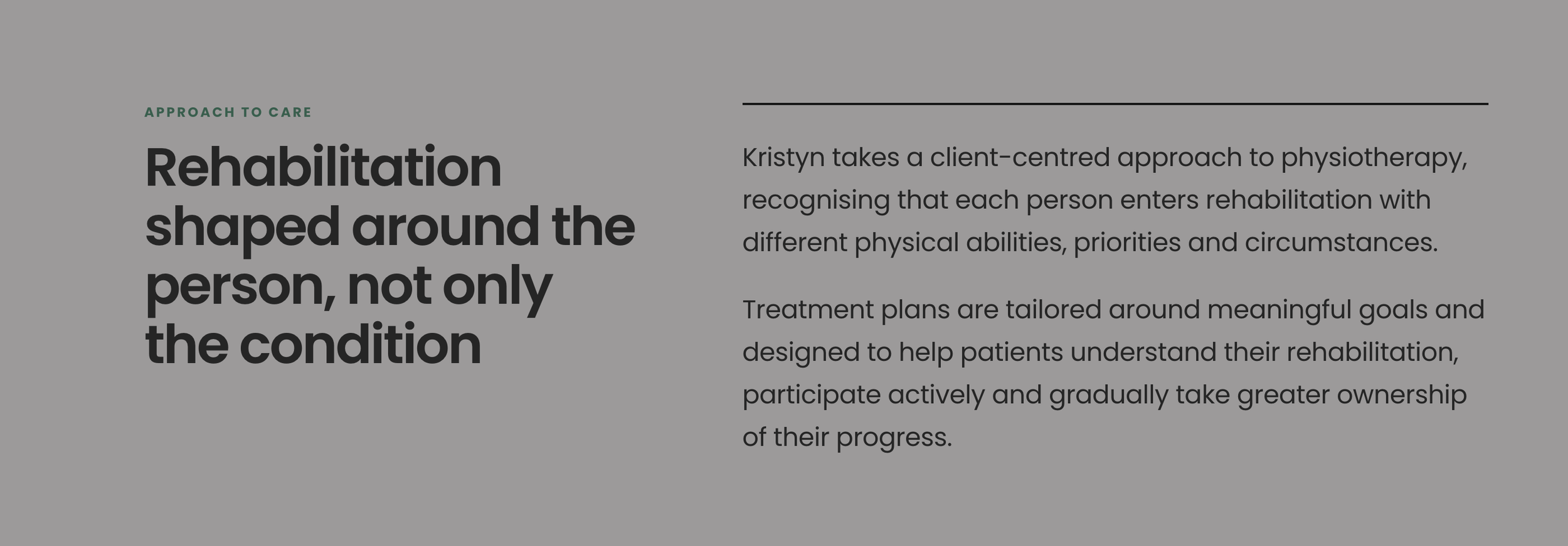
Kristyn’s Approach to physiotherapy
How can physiotherapy improve balance and mobility?
A physiotherapy programme will usually combine several types of movement practice, adjusted to the person’s ability and goals.
Balance exercises can practise staying steady while changing position, shifting weight or turning.
Gait training looks at how a person walks and helps them practise movement in situations they find difficult. Functional exercises bring these elements together through tasks such as rising from a chair or stepping safely.
The exercises should become more challenging as the person improves, while remaining appropriate for their condition. NUHS recommends balance, strengthening, endurance and flexibility work that is individualised and progressive. Singapore’s HealthHub also notes that physiotherapy can assess weaknesses and balance difficulties in people susceptible to falls. NUHS
The aim is practical: helping someone move with greater stability and confidence in daily life. No programme can guarantee that a person will never fall, but targeted balance and strength work can help reduce risk. cdn.who.int
What if someone is afraid to walk after a fall?
Fear can restrict activity even after an injury has healed. Someone may stop taking walks, avoid stairs or rely more heavily on family members. Over time, doing less can make it harder to maintain strength and mobility.
Physiotherapy can provide a supported way to rebuild confidence. A therapist can start with movements the person can manage, practise the activities they have been avoiding, and track progress as the exercises advance.
Family members can also learn what the person can do independently and where they still need assistance.
If a fall has just happened, check for injury before encouraging the person to stand or walk. Pain around the hip, neck or spine, an inability to get up, or confusion calls for prompt medical help.
Refer to the emergency guide here
Physiotherapy for seniors at MoveMed
MoveMed’s functional rehabilitation and neurological rehabilitation services include work on balance, coordination, walking and everyday mobility. Its Novena clinic describes programmes for seniors and people with age-related mobility changes; the Orchard clinic also supports people whose balance or mobility affects daily activities. MoveMed
If an older family member has become less steady or has started avoiding activities they used to manage, a physiotherapy assessment can help identify what has changed and which movements to work on first. The goal is to help them stay as mobile and independent as possible, at a pace suited to their needs.
About MoveMed Physiotherapy Singapore
At MoveMed, we support your recovery through purposeful movement.
Our professionally trained physiotherapists at Novena and Orchard provide tailored sessions in a well-equipped facility—featuring treatment beds, shockwave therapy machines and more —to help you regain strength, mobility, and confidence.
Whether it’s pre-op rehab, pain management or post-op rehab, our team is here to guide your journey every step of the way.
📍(Orchard) Movemed Physiotherapy, 391B Orchard Road Ngee Ann City Office Tower B. #25-03 Singapore 238874
📍(Novena) MoveMed Physiotherapy, 10 Sinaran Dr, #09-04, Novena Medical Center, Singapore 307506
🌐www.movemedsg.com
📞 Call / WhatsApp: +65 9627 2000
📧 Email: hello@movemedsg.com
