
What to Do When an Elderly Person Falls: When to Call 995
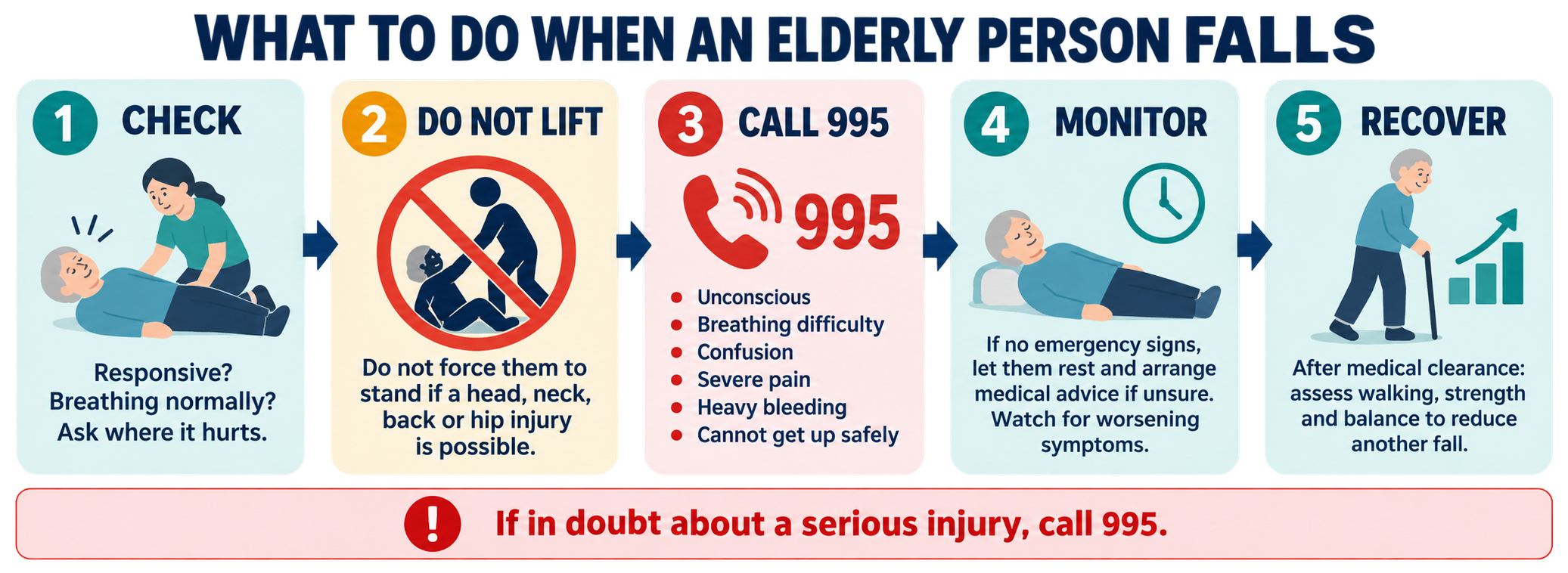
what to do when an elderly person falls
What to Do When an Elderly Person Falls: When to Call 995
What to Do Immediately
1. Check that they are responsive
Ask their name, what happened and whether they feel pain. Check that they are breathing normally.
If they are unconscious, having difficulty breathing or suddenly confused, call 995 immediately.
2. Do not lift them straight away
Ask where it hurts and whether they hit their head. Look for bleeding, swelling, an unusual limb position or difficulty moving.
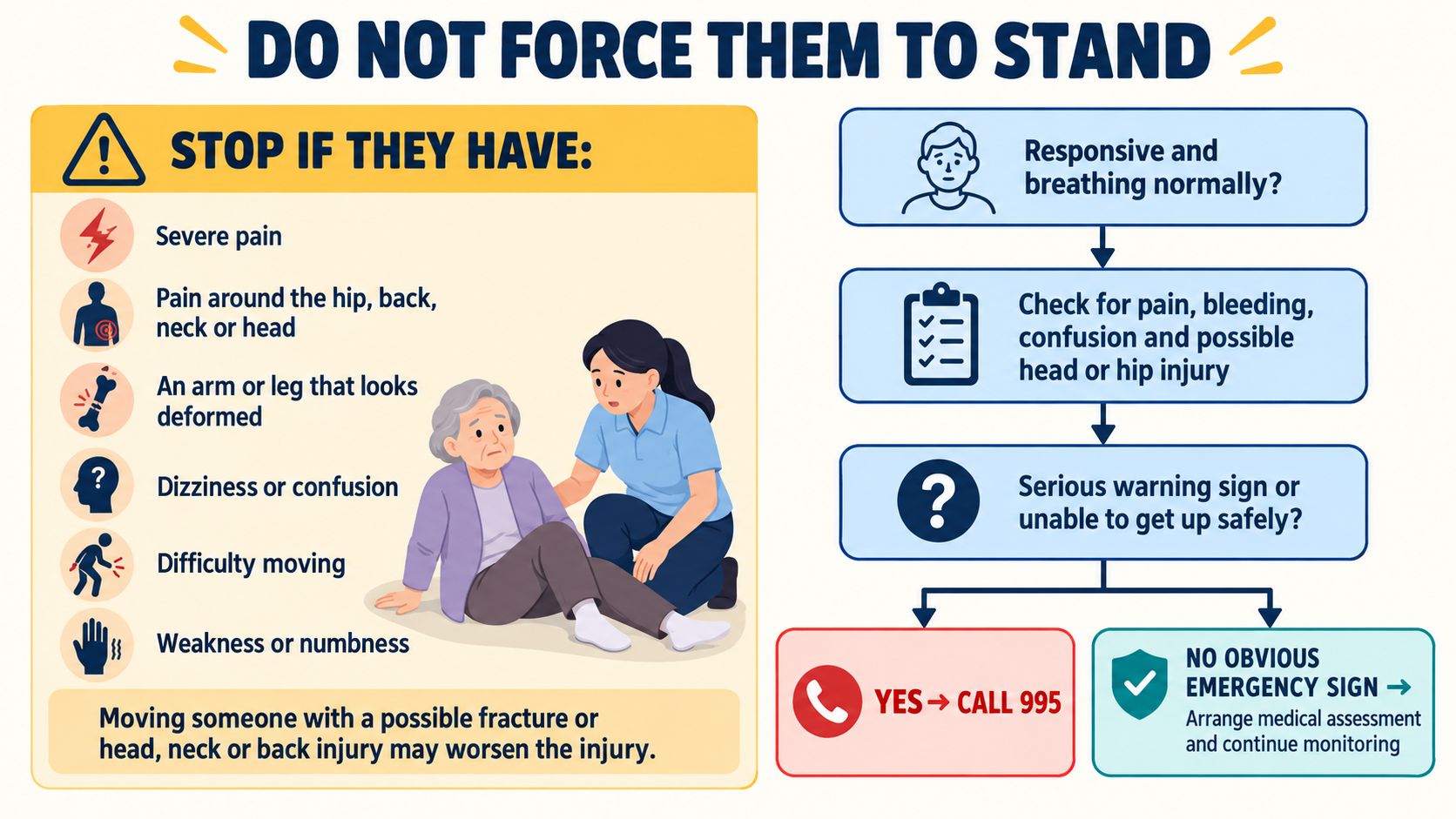
After a fall Do not force standing.png
Call 995 If You Notice These Warning Signs
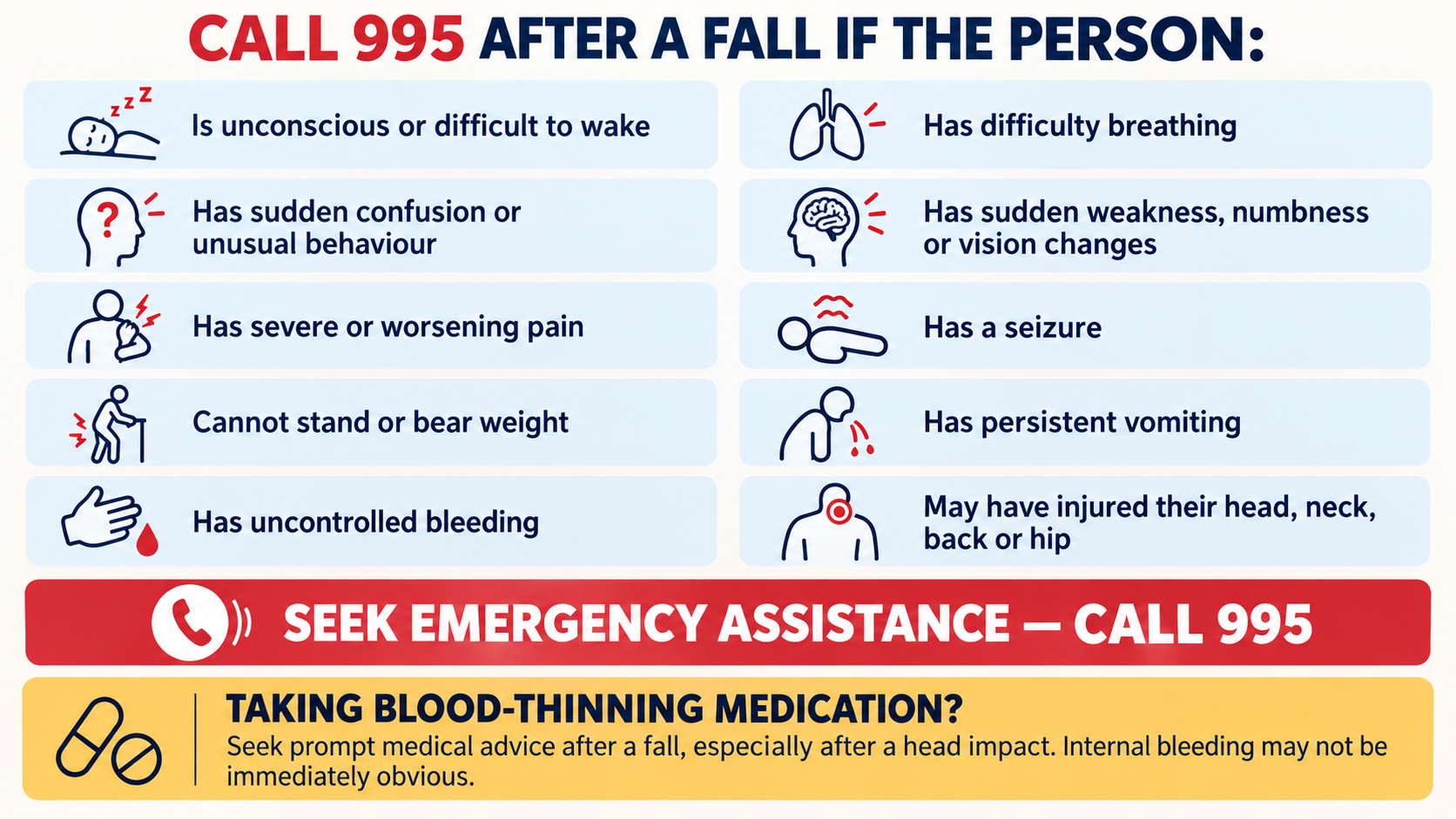
Call 995 Fall Warning Signs
If There Is No Obvious Serious Injury
If the person appears alert and does not have severe pain, give them time to recover from the shock. Do not hurry them into standing.
If they can get up safely, support them slowly and let them rest in a stable chair. Continue watching for increasing pain, dizziness, confusion, vomiting, weakness or unusual sleepiness.
Arrange a medical review if you are uncertain, if the person is frail, or if their walking and behaviour are different after the fall. Symptoms from some injuries may become more noticeable later.
Why Did the Fall Happen?
Treating a bruise or painful joint is only one part of the response. It is also important to understand why the person fell.
Possible contributing factors include:
Reduced leg strength
Poor balance
Dizziness
Changes in vision
Medication effects
Difficulty walking
An unsafe home environment
An underlying medical condition
Falls among older adults can lead to fractures, reduced mobility and loss of independence. They may also cause a fear of falling again, which can make someone less active and progressively weaker.
How Physiotherapy Can Help After Medical Clearance
Physiotherapy is not a replacement for emergency care following a serious fall. Once urgent injuries have been excluded or treated, a physiotherapist can assess factors that may affect future safety, including:
Walking pattern
Lower-limb strength
Balance and coordination
Joint movement
Confidence during everyday activities
Ability to stand, turn and use stairs
The rehabilitation plan may then include strength training, balance exercises, gait training and practical strategies for moving more safely.
If an older family member has been medically cleared but remains unsteady, weak or afraid of falling again, MoveMed Physiotherapy can assess their mobility and develop an appropriate rehabilitation plan at our Novena or Orchard clinic.
About MoveMed Physiotherapy Singapore
At MoveMed, we support your recovery through purposeful movement.
Our professionally trained physiotherapists at Novena and Orchard provide tailored sessions in a well-equipped facility—featuring treatment beds, shockwave therapy machines and more —to help you regain strength, mobility, and confidence.
Whether it’s pre-op rehab, pain management or post-op rehab, our team is here to guide your journey every step of the way.
📍(Orchard) Movemed Physiotherapy, 391B Orchard Road Ngee Ann City Office Tower B. #25-03 Singapore 238874
📍(Novena) MoveMed Physiotherapy, 10 Sinaran Dr, #09-04, Novena Medical Center, Singapore 307506
🌐www.movemedsg.com
📞 Call / WhatsApp: +65 9627 2000
📧 Email: hello@movemedsg.com
