
Physiotherapy vs Massage: What’s the Difference and Which One Do You Need?
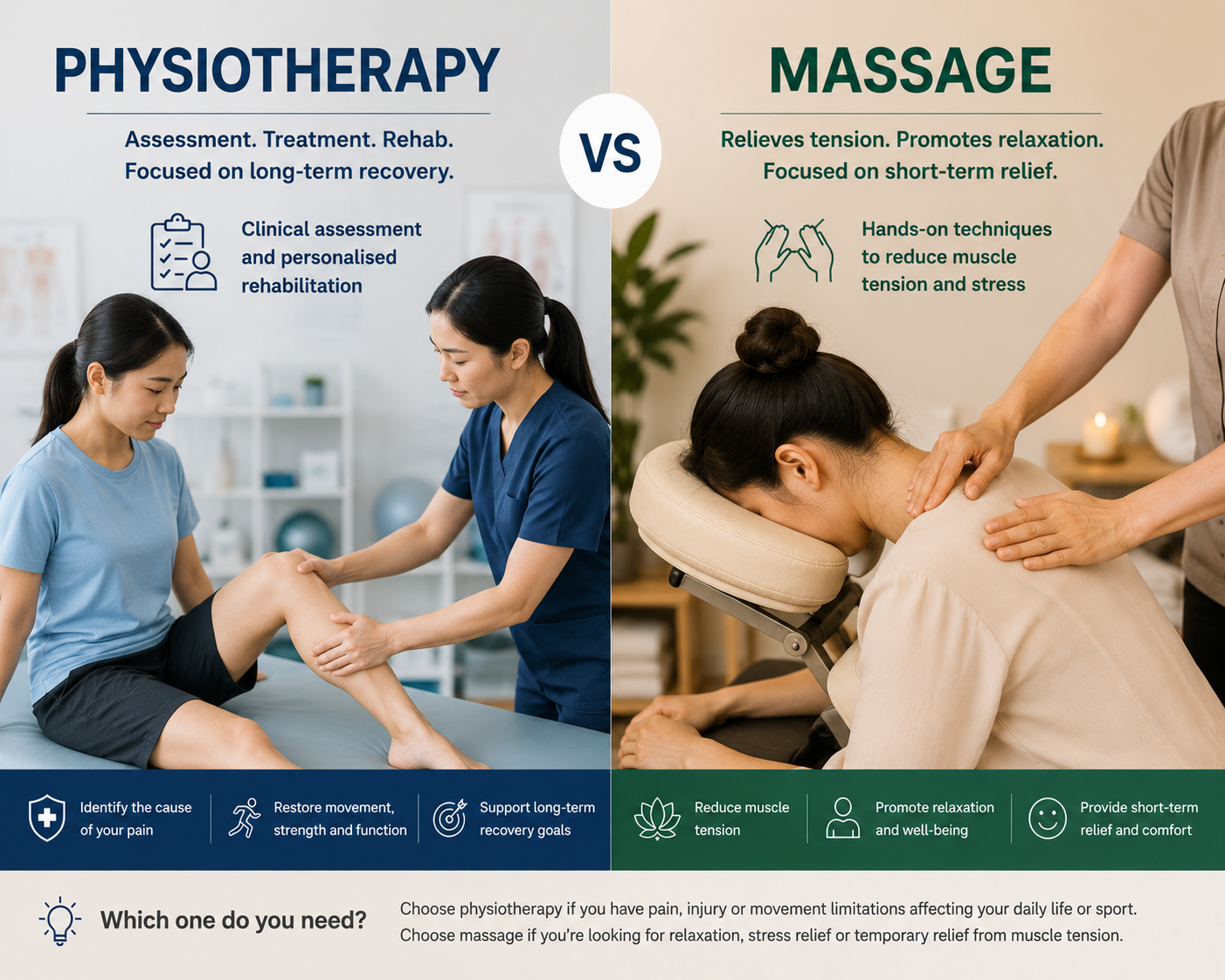
Physiotherapy vs Massage
Muscle pain, stiffness and discomfort are common reasons people seek either physiotherapy or massage. Because both may involve hands-on treatment, stretching and movement, they can appear similar at first.
However, physiotherapy and massage serve different purposes.
Massage is generally focused on relieving muscle tension, promoting relaxation and reducing temporary discomfort. Physiotherapy involves a broader clinical assessment of pain, injury, movement and function, followed by a treatment plan designed to address the factors contributing to the problem.
The right choice depends on what you are experiencing, how long it has been present and what you want to return to doing.
What Is Physiotherapy?
Physiotherapy is a healthcare profession focused on restoring movement, reducing pain and improving physical function.
A physiotherapist assesses how your joints, muscles, nerves and movement patterns may be contributing to your symptoms. Treatment is then planned around your diagnosis or clinical presentation, daily activities and recovery goals.
Physiotherapy vs Massage: What’s the Difference and Which One Do You Need?
Muscle pain, stiffness and discomfort are common reasons people seek either physiotherapy or massage. Because both may involve hands-on treatment, stretching and movement, they can appear similar.
However, they serve different purposes. Massage generally focuses on relaxation, muscle tension and temporary symptom relief. Physiotherapy includes a broader clinical assessment of pain, injury, movement and physical function, followed by a structured recovery plan.
Massage is usually chosen for comfort and relaxation. Physiotherapy is more suitable when pain, weakness or restricted movement affects daily activities, exercise or recovery from injury.
What Is Physiotherapy?
Physiotherapy is a healthcare profession focused on reducing pain, restoring movement and improving physical function.
A physiotherapist assesses how your joints, muscles, nerves and movement patterns may be contributing to your symptoms. Treatment is then tailored to your condition, lifestyle and recovery goals.
- Movement, strength and mobility assessment
- Therapeutic exercise and progressive rehabilitation
- Manual therapy and pain-management techniques
- Education and activity modification
- Post-operative or sports rehabilitation
- Home exercise and return-to-activity planning
The goal is not only to reduce symptoms, but also to help you regain function and manage the physical demands of work, exercise and everyday life.
What Is Massage?
Massage involves manipulating muscles and other soft tissues using pressure, kneading, rubbing or stretching techniques.
It may be helpful for general muscle tightness, mild post-exercise soreness, relaxation and temporary relief from stiffness or fatigue.
Massage does not usually include a full clinical assessment of joint function, muscle strength, neurological symptoms or movement patterns.
Physiotherapy vs Massage: Key Differences
When Massage May Be Suitable
Massage may be suitable when your main concern is temporary muscle tightness, fatigue or general tension without a significant injury.
Massage may also be used alongside physiotherapy when temporary symptom relief makes movement or exercise more comfortable.
When Physiotherapy May Be More Appropriate
Physiotherapy is generally more appropriate when symptoms affect movement, strength, daily function or your ability to participate in sport.
- Pain keeps returning or is getting worse
- You have weakness, instability or restricted movement
- Symptoms affect walking, lifting, work or exercise
- You are recovering from an injury or surgery
- You are unsure whether it is safe to return to activity
- Pain is accompanied by numbness, tingling or radiating symptoms
A physiotherapist can assess whether the problem may involve a muscle, joint, tendon, nerve or movement pattern, and whether further medical review is needed.
Why Massage May Help but the Pain Returns
Massage can temporarily reduce muscle tension and make an area feel more comfortable. However, it may not address why the muscle became overloaded or painful.
Recurring symptoms may be influenced by reduced strength, limited mobility, a previous injury, sudden increases in training, prolonged work positions or difficulty tolerating certain physical demands.
Massage may reduce the symptom. Physiotherapy aims to identify and address the factors contributing to it.
Does Physiotherapy Include Massage?
Physiotherapy may include massage or other manual techniques, but these are usually only one part of the treatment plan.
Hands-on treatment may be used to reduce pain, improve short-term mobility or make exercise more comfortable. Treatment will usually progress towards active rehabilitation such as strengthening, mobility work, balance training and gradual exposure to more demanding movements.
Can Massage Replace Physiotherapy After an Injury?
Massage should not normally replace physiotherapy when there is a diagnosed injury, significant loss of function or recovery after surgery.
Rehabilitation following procedures such as ACL reconstruction, meniscus surgery or shoulder surgery usually requires a structured progression of mobility restoration, strength rebuilding, balance, functional movement and return-to-sport testing.
Massage may support comfort during some stages of recovery, but it cannot replace progressive rehabilitation.
Which Is Better for Back or Neck Pain?
Massage may be helpful when discomfort is mild, short-lived and associated with general muscle tension.
Physiotherapy may be more appropriate when pain keeps returning, movement is restricted, symptoms affect work or sleep, or discomfort travels into the arm or leg.
A physiotherapist may assess spinal movement, strength, posture tolerance, work demands and the activities that aggravate your symptoms rather than focusing only on the painful area.
Which Is Better for Sports Recovery?
Massage may help reduce the sensation of soreness or tightness after training. However, sports rehabilitation usually involves more than symptom relief.
Physiotherapy may include assessment of strength differences, joint mobility, balance, running or landing mechanics, training-load tolerance and readiness to return to sport.
Can You Have Both?
Yes. Physiotherapy and massage do not always need to be treated as competing options.
Some people use massage for relaxation or temporary symptom relief while following a physiotherapy programme for strength, mobility and functional recovery.
What Happens During a Physiotherapy Appointment?
A physiotherapy appointment usually begins with a discussion about your symptoms, medical history, work, exercise and recovery goals.
The physiotherapist may then assess movement, mobility, strength, balance or functional activities relevant to your condition. Treatment may include manual therapy, but it will often also involve exercises, education and guidance for what to do between sessions.
How to Decide Between Physiotherapy and Massage
When to Seek Medical Attention
Physiotherapy and massage are not substitutes for urgent medical assessment.
- Chest pain or difficulty breathing
- Sudden severe weakness
- Loss of bladder or bowel control
- Progressive numbness
- Significant trauma or suspected fracture
- Severe or rapidly worsening pain, swelling or redness
Physiotherapy vs Massage: The Main Difference
Massage primarily aims to reduce muscle tension and improve short-term comfort.
Physiotherapy takes a broader approach by assessing pain, movement and physical function, then creating a structured plan to support recovery and return to activity.
Neither option is universally better. The right choice depends on your symptoms, how long they have been present and what you want to return to doing.
Speak to a Physiotherapist at MoveMed
At MoveMed Physiotherapy, treatment is planned around your condition, lifestyle and recovery goals. Our physiotherapists assess the factors contributing to your symptoms and help you rebuild strength, mobility and confidence.
Book an AppointmentFrequently Asked Questions
Is physiotherapy the same as massage?
No. Massage mainly focuses on manipulating muscles and soft tissues to reduce tension and improve comfort. Physiotherapy includes clinical assessment, exercise rehabilitation, education and functional recovery.
Is massage or physiotherapy better for muscle pain?
Massage may help with mild or temporary muscle tension. Physiotherapy may be more appropriate when pain keeps returning, affects movement or is associated with weakness, injury or reduced function.
Do physiotherapists perform massage?
Some physiotherapists use massage and other manual techniques when clinically appropriate. These are generally combined with exercise, education and progressive rehabilitation.
Should I get a massage after a sports injury?
Massage may provide temporary relief, but an injury should be assessed if there is swelling, weakness, instability, restricted movement or difficulty returning to activity.
Can massage help after surgery?
Massage may sometimes be used during post-operative care, depending on the procedure and stage of healing. It should not replace structured rehabilitation or be performed around a surgical area without appropriate clearance.
How do I know whether I need physiotherapy?
Consider physiotherapy if symptoms persist, recur or affect your ability to work, exercise, walk or complete everyday activities. It is also appropriate after many injuries and surgical procedures.
About MoveMed Physiotherapy Singapore
At MoveMed, we support your recovery through purposeful movement.
Our professionally trained physiotherapists at Novena and Orchard provide tailored sessions in a well-equipped facility—featuring treatment beds, shockwave therapy machines and more —to help you regain strength, mobility, and confidence.
Whether it’s pre-op rehab, pain management or post-op rehab, our team is here to guide your journey every step of the way.
📍(Orchard) Movemed Physiotherapy, 391B Orchard Road Ngee Ann City Office Tower B. #25-03 Singapore 238874
📍(Novena) MoveMed Physiotherapy, 10 Sinaran Dr, #09-04, Novena Medical Center, Singapore 307506
🌐www.movemedsg.com
📞 Call / WhatsApp: +65 9627 2000
📧 Email: hello@movemedsg.com
