
Why Does My Old Injury Ache When the Weather Changes?
Rain and weather-related pain
Have you ever noticed an old knee injury becoming uncomfortable just before it rains? Or a previously sprained ankle feeling stiff on an unusually wet day?
For some people, these sensations are familiar. An injury may have healed months or years ago, yet occasional aching, tightness or discomfort seems to return when the weather changes.
In Singapore, where heavy rainfall and high humidity are common, it is easy to associate these symptoms with rainy weather.
But does the weather actually affect an old injury? And if the injury has already healed, why might discomfort return?
The relationship is more complicated than it first appears. While some people report weather-related pain, scientific research has not established a consistent cause-and-effect relationship.
Understanding what else may contribute to recurring joint pain can help you manage these symptoms more effectively.
Can Weather Changes Really Make Old Injuries Hurt?
Rainy Puddle Among Green Shoots
There is some evidence linking weather conditions to pain, but the findings remain inconsistent.
A 2019 study published in npj Digital Medicine followed 2,658 people with chronic pain. Researchers found modest associations between pain and factors such as relative humidity, atmospheric pressure and wind speed.
However, a 2024 systematic review involving more than 15,000 participants found no clear association between changes in temperature, humidity, atmospheric pressure or rainfall and new episodes or flare-ups of several common musculoskeletal conditions, including knee and lower back pain.
These findings suggest that weather may be associated with symptoms in some individuals, but it cannot reliably explain every instance of recurring pain.
Why Might an Old Injury Still Feel Sensitive?
Even after an injury has healed, several factors may contribute to recurring discomfort.
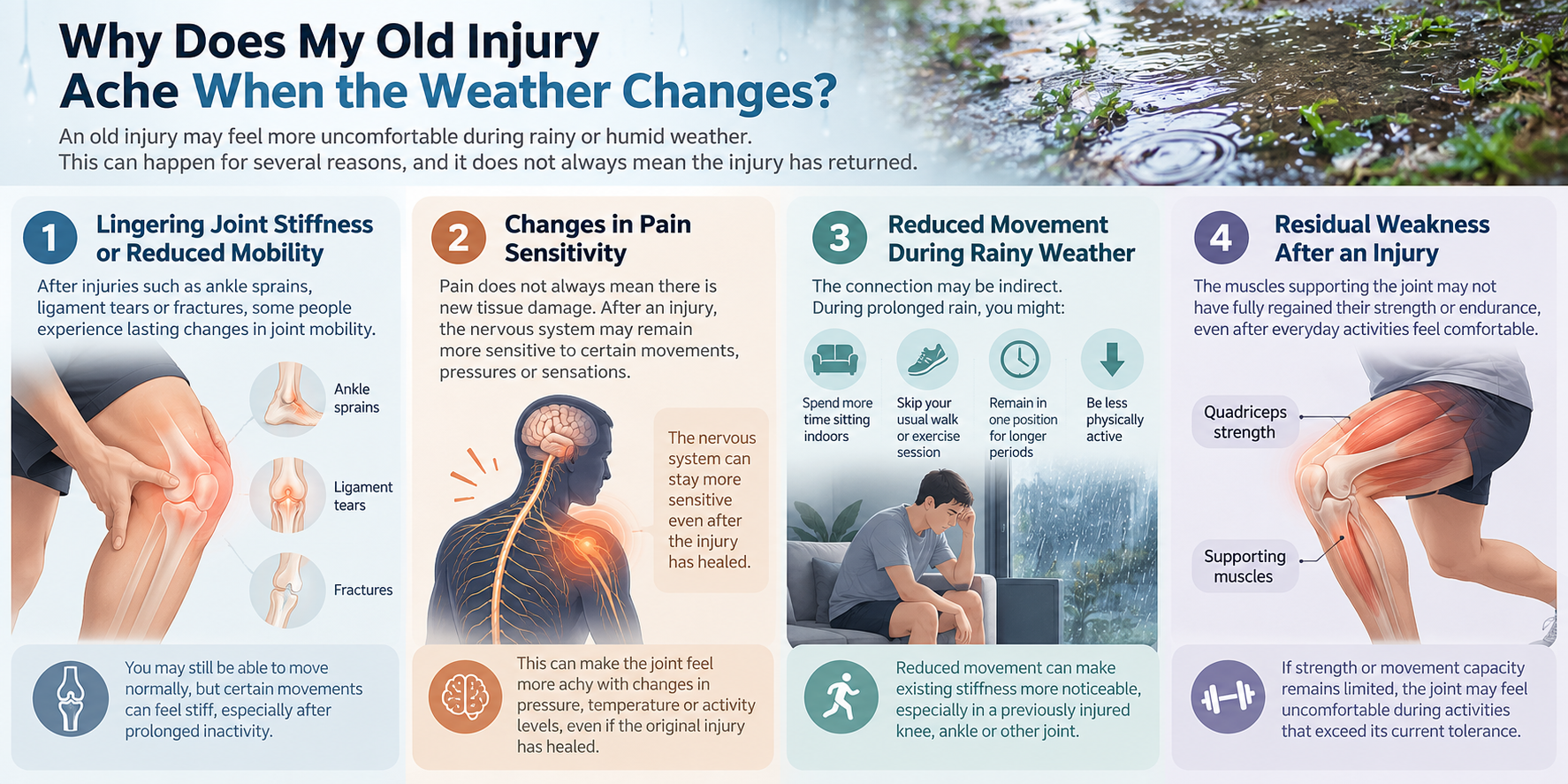
Why Old Injuries Ache in Rainy Weather
Which Old Injuries May Experience Recurring Aches?
People sometimes report recurring discomfort after:
Previous knee injuries: ACL injuries, meniscus tears and other knee problems may be followed by lingering stiffness, reduced strength or movement limitations.
Ankle sprains: A previous ankle sprain may leave residual stiffness, weakness or instability, particularly if rehabilitation was incomplete.
Fractures: Some people continue to experience changes in mobility or sensitivity around a previously fractured area after healing.
Shoulder injuries: Previous dislocations, tendon injuries and shoulder surgery can sometimes be followed by intermittent discomfort or restricted movement.
Post-surgical injuries: Depending on the procedure, recovery may involve ongoing work to restore mobility, strength and confidence in movement.
These examples do not mean that weather has been proven to trigger pain in each condition. They are injuries where residual symptoms may remain and deserve attention if they affect everyday activities.
For a closer look at managing ongoing discomfort, read our guide to Living With Chronic Pain and How Physiotherapy Can Help.
What Can You Do When Your Old Injury Aches?
If your symptoms are mild, familiar and not accompanied by new warning signs, several strategies may help you manage the discomfort.
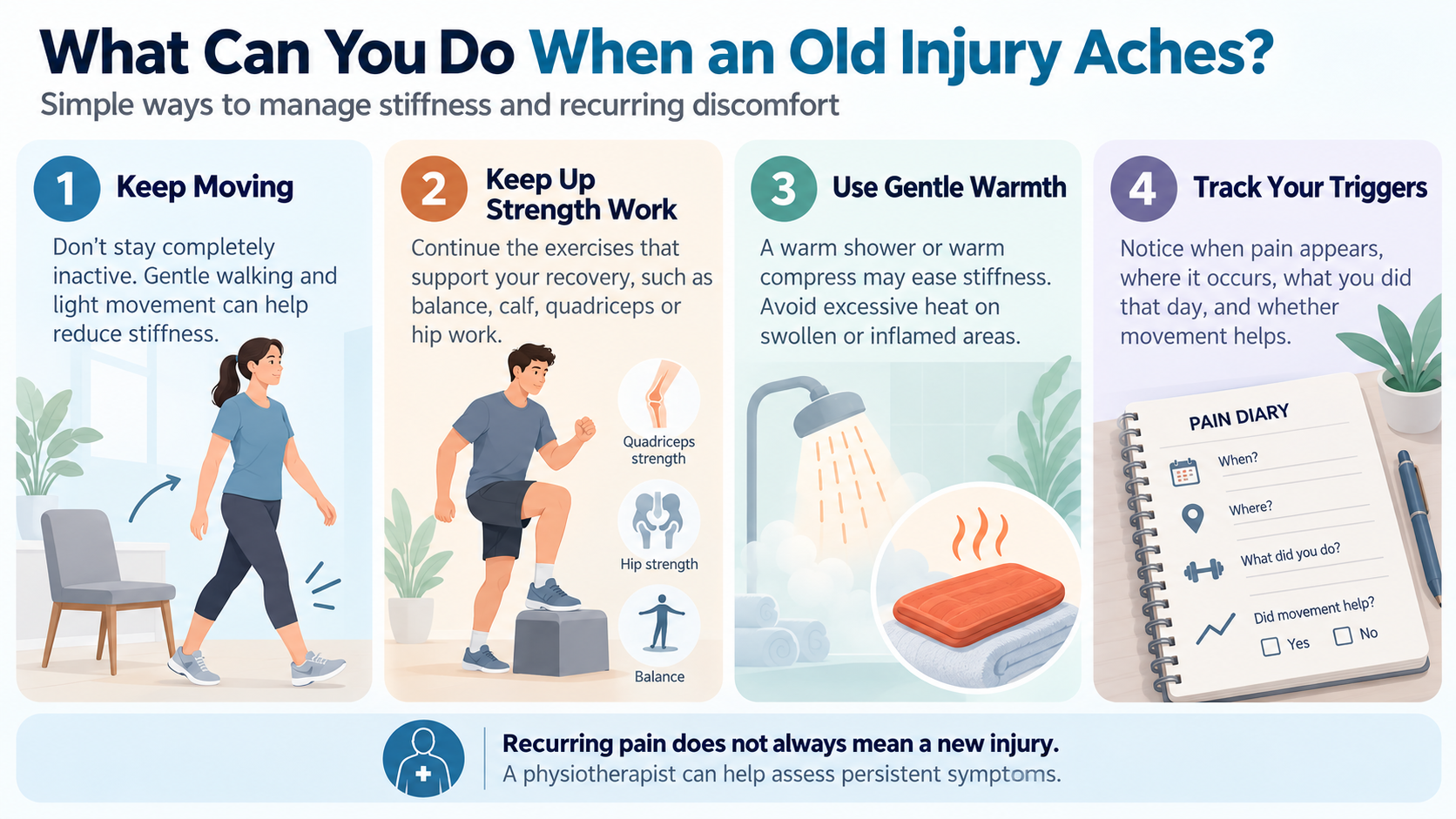
Managing Old Injury Aches
When Should You Seek Physiotherapy for an Old Injury?
An occasional mild ache does not always require treatment.
However, recurring discomfort is worth assessing when it starts affecting how you move or perform everyday activities.
Consider a physiotherapy assessment if:
Your old injury repeatedly becomes painful or stiff.
You have lost some of the mobility you previously regained.
You experience discomfort when walking, climbing stairs or exercising.
The affected joint feels weak or unstable.
You have reduced your activity because you are worried about triggering pain.
Symptoms continue to return despite rest or self-management.
Do not automatically attribute new or worsening symptoms to the weather. A suddenly swollen, hot or red joint, fever, severe pain, or an inability to bear weight requires prompt medical assessment. Sudden calf swelling or pain, particularly with breathlessness or chest pain, also needs urgent medical attention.
How Can Physiotherapy Help With Recurring Joint Pain?
Physiotherapy cannot control the weather, but it can help identify and address factors contributing to discomfort in a previously injured area.
At MoveMed Physiotherapy, treatment begins with understanding your injury history, current symptoms and the activities that matter to you.
Depending on the assessment, physiotherapy may involve the following.
1. Assessing joint mobility and strength
Your physiotherapist may examine your range of motion, muscle strength, joint stability and functional movement to identify areas that could benefit from rehabilitation.
2. Restoring comfortable movement
Targeted mobility exercises and appropriate hands-on techniques may help manage stiffness and improve movement tolerance.
3. Progressive strengthening
A structured exercise programme can help rebuild strength and improve the affected area's ability to tolerate everyday demands.
4. Managing recurring pain
Education, activity modification and graded exercise can help you understand symptom flare-ups and manage them without unnecessarily avoiding movement.
5. Supporting a return to normal activities
Whether your goal is to walk comfortably, return to running or resume a sport, rehabilitation can be tailored to your current ability and long-term goals.
You can learn more about MoveMed's Pain Management Physiotherapy, Therapeutic Exercises and Post-Operative Rehabilitation Programme.
Does an Old Injury Aching Mean It Has Not Healed Properly?
Not necessarily.
Some people continue to experience intermittent discomfort after an injury despite completing the initial healing process.
Recurring pain can be influenced by residual stiffness, strength limitations, sensitivity, current activity demands or other conditions unrelated to the original injury.
If the pain is changing, becoming more frequent or limiting your activities, an assessment can help determine whether further rehabilitation or medical evaluation is appropriate.
Managing Old Injury Pain in Singapore's Rainy Weather
You may notice your old injury more often during rainy days, but that does not necessarily mean the weather is damaging your joints.
If an old knee, ankle, shoulder or other injury continues to cause discomfort, you do not have to assume that occasional pain is simply something you must live with.
MoveMed Physiotherapy Singapore provides personalised assessment, pain management and injury rehabilitation at our Novena and Orchard clinics.
Our physiotherapists can help you understand your recurring symptoms and develop a rehabilitation plan based on your movement, strength and recovery goals.
Contact MoveMed to arrange a physiotherapy assessment.
This article provides general health information and is not a substitute for individual medical assessment. Persistent, new or worsening symptoms should be evaluated by an appropriate healthcare professional.
About MoveMed Physiotherapy Singapore
At MoveMed, we support your recovery through purposeful movement.
Our professionally trained physiotherapists at Novena and Orchard provide tailored sessions in a well-equipped facility—featuring treatment beds, shockwave therapy machines and more —to help you regain strength, mobility, and confidence.
Whether it’s pre-op rehab, pain management or post-op rehab, our team is here to guide your journey every step of the way.
📍(Orchard) Movemed Physiotherapy, 391B Orchard Road Ngee Ann City Office Tower B. #25-03 Singapore 238874
📍(Novena) MoveMed Physiotherapy, 10 Sinaran Dr, #09-04, Novena Medical Center, Singapore 307506
🌐www.movemedsg.com
📞 Call / WhatsApp: +65 9627 2000
📧 Email: hello@movemedsg.com
