

Physiotherapy Recovery Bench Setup.png
Is It Normal to Feel Sore After Physiotherapy?
Feeling a little sore after physiotherapy is fairly common, especially if your session involved strengthening exercises, stretching, manual therapy or movements your body is not accustomed to.
However, not all pain or discomfort after treatment should be considered normal. Understanding the difference can help you recover safely and recognise when something needs medical attention.
Why Do You Feel Sore After Physiotherapy?
Physiotherapy often involves working muscles and joints that may have been weakened, stiff or underused due to injury, surgery or inactivity.
You may experience:
Mild muscle aches or tenderness in the treated area.
Temporary stiffness after exercises or manual therapy.
Muscle fatigue after strengthening exercises.
Delayed onset muscle soreness (DOMS), particularly after unfamiliar exercises.
Mild post-treatment soreness often settles within 24–48 hours, although exercise-related muscle soreness can last several days.
Importantly, soreness does not necessarily mean your treatment was effective, and you do not need to feel sore after every session to make progress.
What Is Normal, and What Isn't?
Usually expectedMay require medical attentionMild, dull muscle achesSharp, severe or worsening painTemporary stiffnessSignificant new swelling, redness or warmthMuscle fatigue after exercisesNew or worsening weakness or numbnessSoreness that gradually improvesPain that continues to worsen or does not settle as expectedMild tenderness around worked musclesUnexplained breathlessness, chest pain or coughing blood
While some discomfort is expected during rehabilitation, symptoms that are unusual, progressive or unrelated to the treated area should not automatically be attributed to physiotherapy.
What Should You Do if You Feel Sore After Physiotherapy?
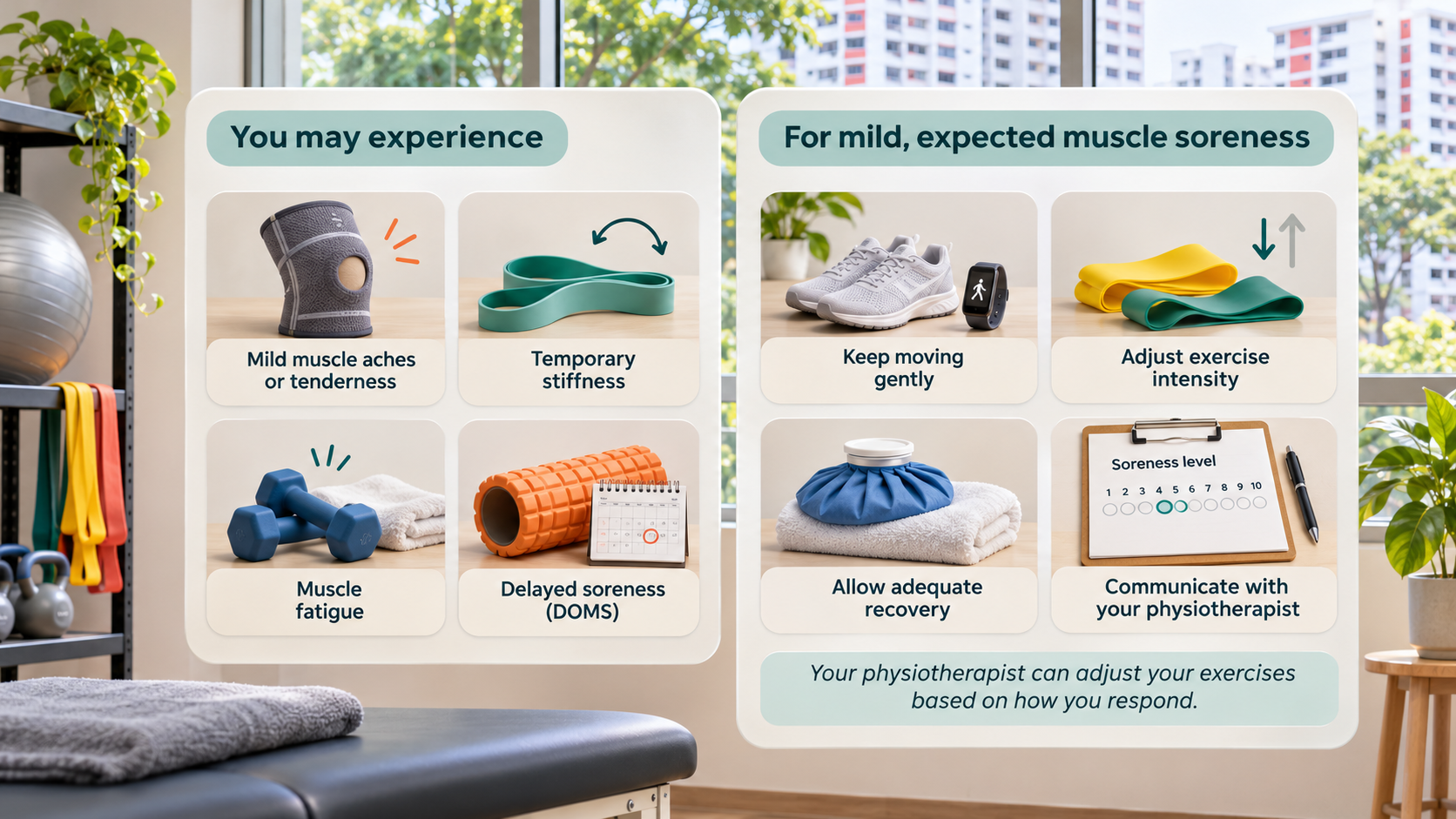
For mild, expected muscle soreness:
Keep moving gently. Light activity can help maintain mobility without overloading recovering muscles.
Adjust your exercise intensity. Avoid pushing through sharp pain or significantly worsening symptoms.
Allow adequate recovery. Give your body time to adapt to unfamiliar movements.
Communicate with your physiotherapist. Explain where you feel sore, how intense the discomfort is and whether it is improving.
Your physiotherapist can adjust exercise difficulty, repetitions or treatment intensity based on how you respond.
For patients recovering from surgery, follow the specific precautions provided by your surgeon and rehabilitation team.
When Should You Contact Your Physiotherapist?
If soreness is unexpectedly severe, persists longer than anticipated or interferes with your usual activities, inform your physiotherapist.
However, symptoms such as unexplained breathlessness, chest pain, coughing up blood or rapidly worsening swelling require medical assessment rather than waiting for your next physiotherapy appointment.
About MoveMed Physiotherapy Singapore
At MoveMed, we support your recovery through purposeful movement.
Our professionally trained physiotherapists at Novena and Orchard provide tailored sessions in a well-equipped facility—featuring treatment beds, shockwave therapy machines and more —to help you regain strength, mobility, and confidence.
Whether it’s pre-op rehab, pain management or post-op rehab, our team is here to guide your journey every step of the way.
📍(Orchard) Movemed Physiotherapy, 391B Orchard Road Ngee Ann City Office Tower B. #25-03 Singapore 238874
📍(Novena) MoveMed Physiotherapy, 10 Sinaran Dr, #09-04, Novena Medical Center, Singapore 307506
🌐www.movemedsg.com
📞 Call / WhatsApp: +65 9627 2000
📧 Email: hello@movemedsg.com
