
Knee Surgery in Singapore: Procedures and Physiotherapy
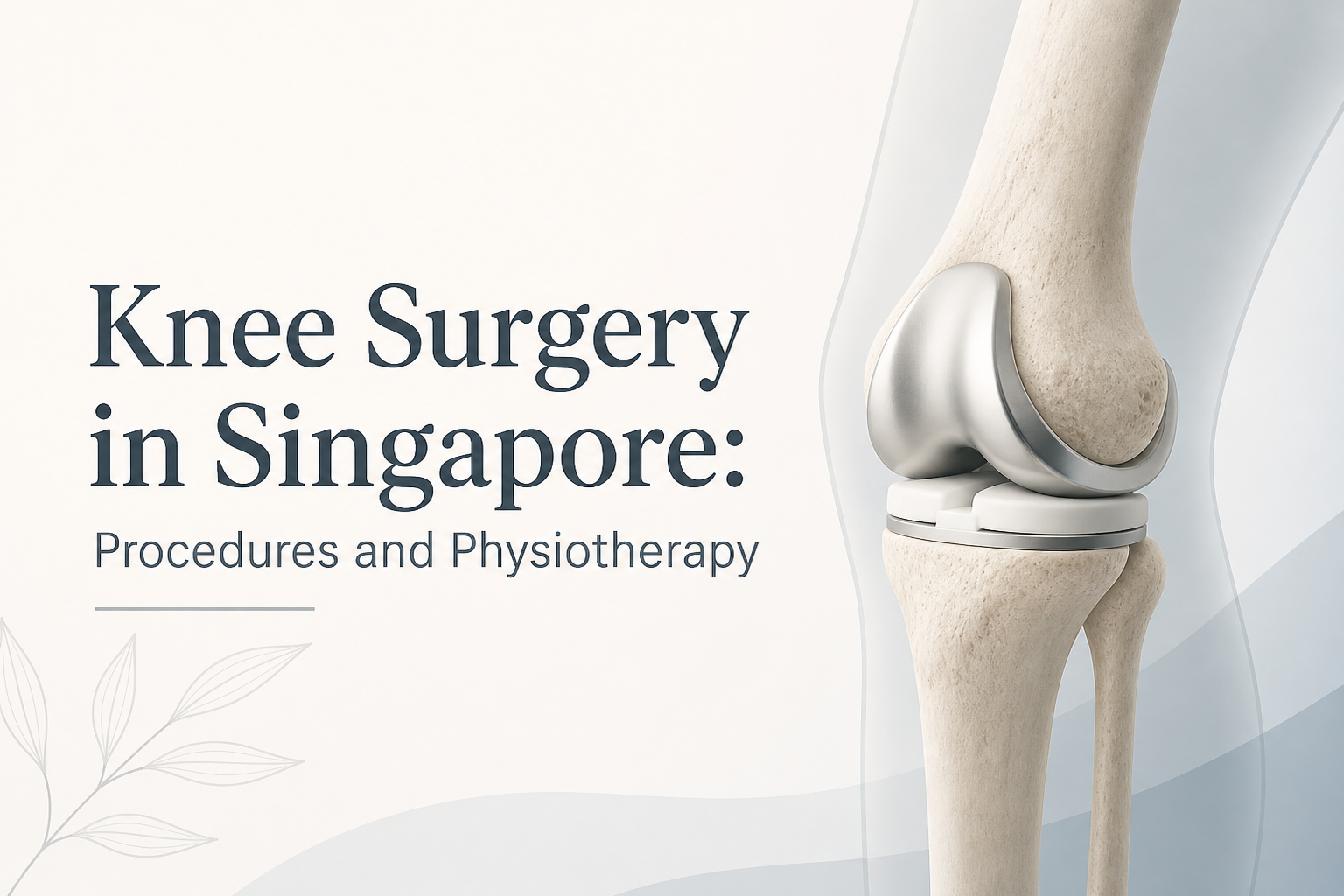
SLAP Tear Rehab & Recovery
Knee Surgery Recovery in Singapore: What Each Procedure Means & How Physiotherapy Helps
If you’ve been diagnosed with a knee injury or are planning surgery, understanding your condition is the first step to recovery. This guide covers the most common knee procedures — what they involve, what to expect, and how physiotherapy helps you return to normal function.
Quick Navigation
- Meniscal Repair
- Knee Arthroscopy
- Total Knee Replacement (TKR)
- Partial Knee Replacement
- ACL, PCL, MCL & LCL Repairs
- Cartilage Repair & Chondroplasty
- Subchondroplasty
- Fracture Fixation (ORIF & Patella)
Meniscal Repair
What it is: A procedure to repair or preserve the meniscus (knee cartilage) after a tear, usually caused by twisting injuries.
Common symptoms:
- Knee pain with twisting or squatting
- Locking or catching sensation
- Swelling and stiffness
Treatment & Recovery:
- Physiotherapy to restore knee motion and strength
- Gradual return to weight-bearing
- Controlled progression back to sport or activity
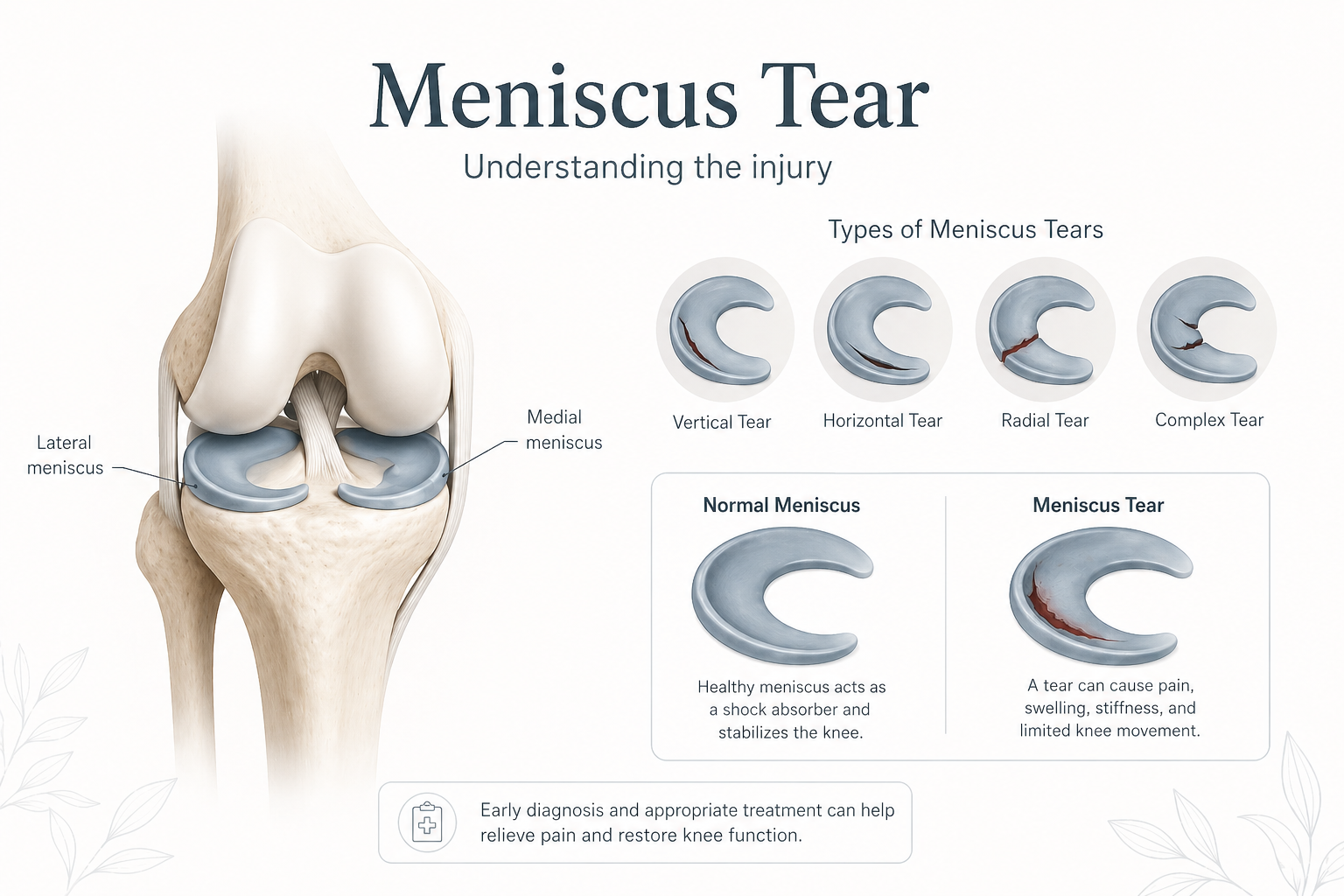
Meniscus Tear
Knee Arthroscopy
What it is: A minimally invasive surgery used to diagnose and treat joint problems such as cartilage damage or loose bodies.
Common symptoms leading to surgery:
- Persistent knee pain
- Swelling or instability
- Limited movement
Recovery:
- Early physiotherapy to restore movement
- Swelling control and muscle activation
- Return to function typically within weeks
Total Knee Replacement (TKR)
What it is: Replacement of the knee joint with artificial components, typically for severe osteoarthritis.
Common symptoms:
- Chronic knee pain
- Stiffness and reduced mobility
- Difficulty walking or climbing stairs
Recovery:
- Structured physiotherapy is essential
- Focus on walking, strength, and mobility
- Full recovery may take several months
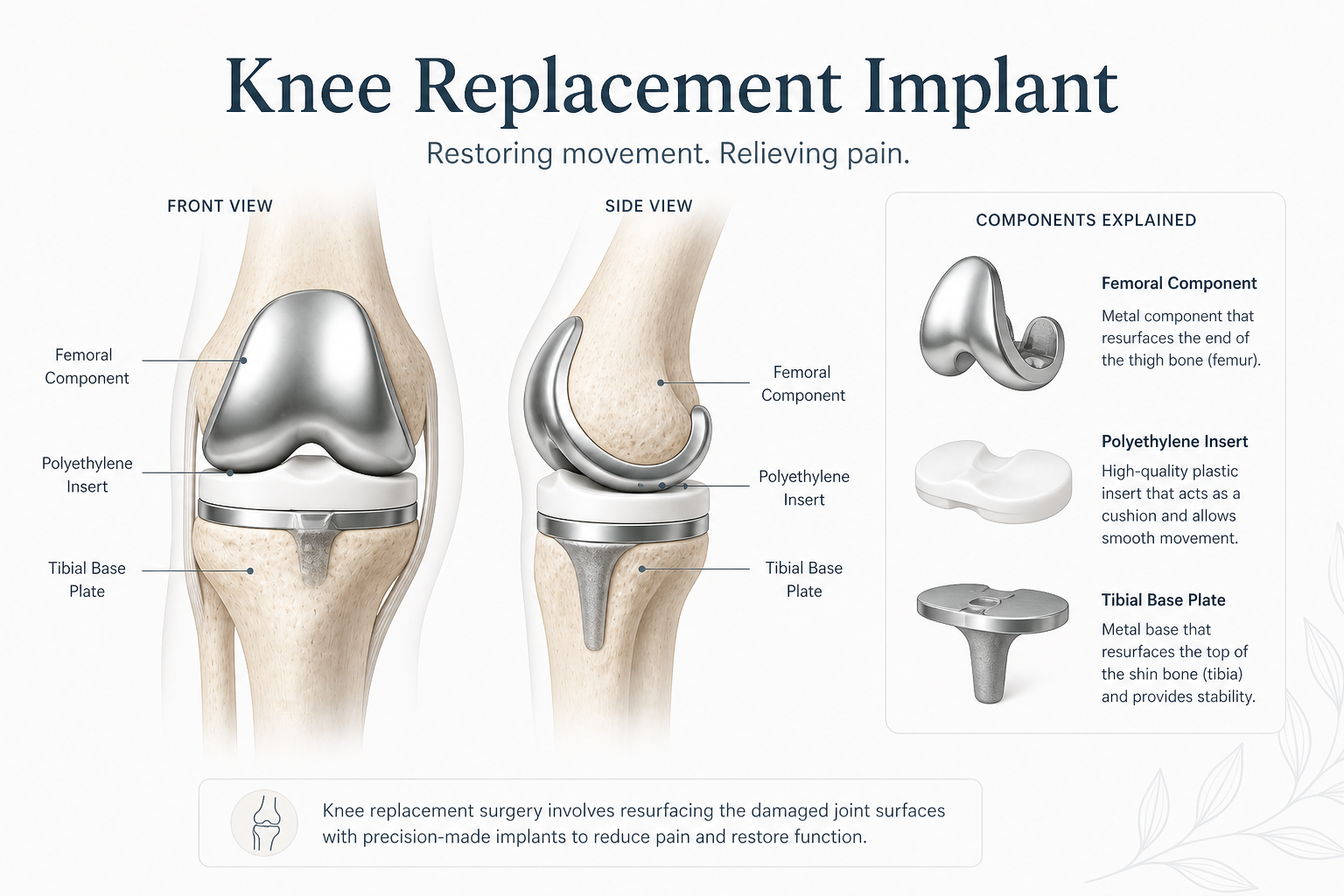
Knee replacement implant
Partial Knee Replacement
What it is: Replacement of only the damaged part of the knee joint.
Key difference: Less invasive than TKR, faster recovery in suitable patients.
Recovery:
- Quicker return to walking
- Physiotherapy for strength and joint control
ACL, PCL, MCL & LCL Repairs
What it is: Surgical repair or reconstruction of knee ligaments, commonly due to sports injuries.
Symptoms:
- Knee instability or “giving way”
- Swelling after injury
- Pain with movement
Recovery:
- Long-term physiotherapy (3–9 months)
- Strength and stability training
- Return-to-sport progression
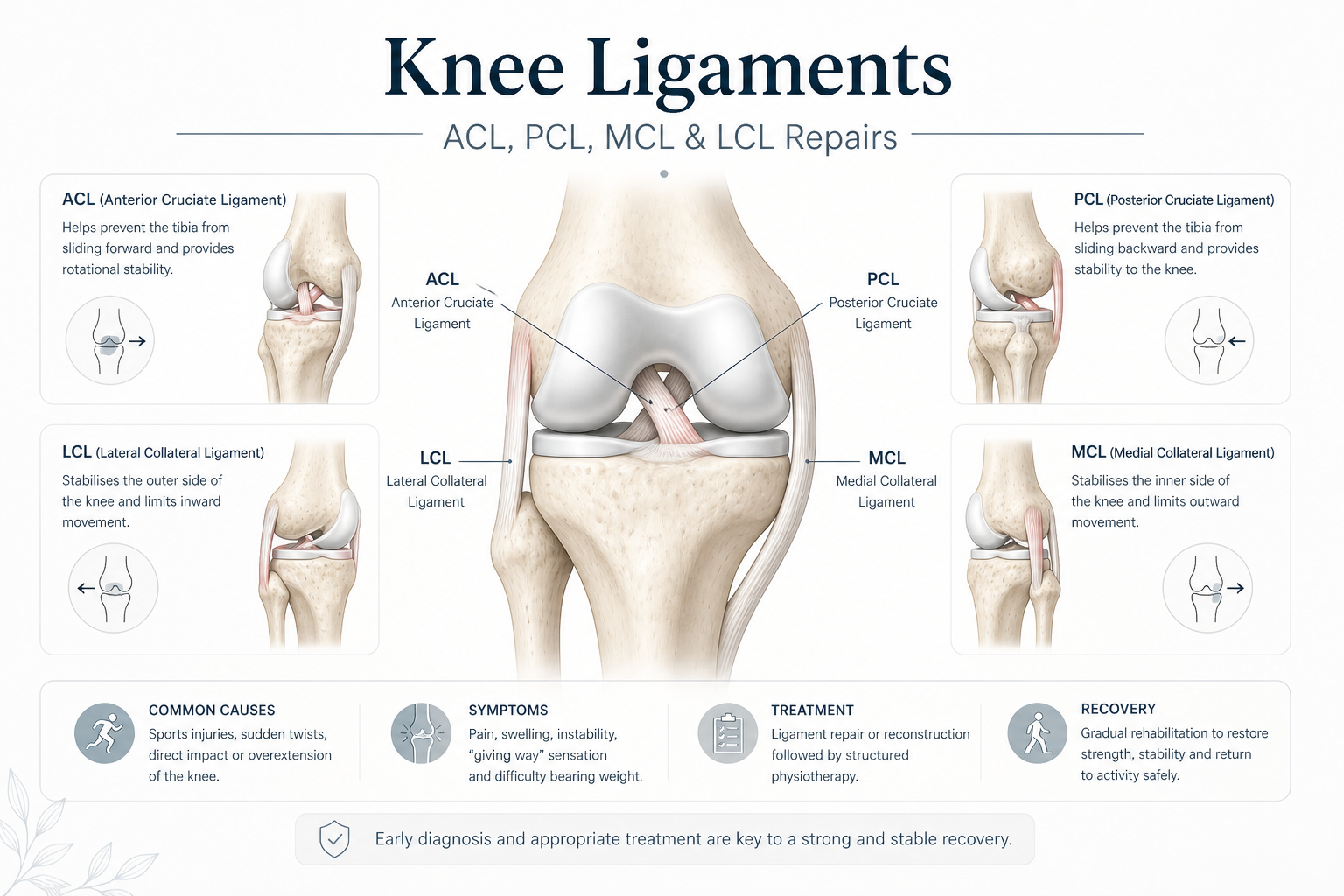
Knee ligaments: ACL, PCL, MCL, LCL Diagram
Cartilage Repair & Chondroplasty
What it is: Procedures to smooth or restore damaged cartilage in the knee.
Symptoms:
- Joint pain and stiffness
- Grinding or clicking
Recovery:
- Controlled loading of the joint
- Strengthening and mobility work
Subchondroplasty
What it is: A procedure targeting bone marrow lesions beneath the cartilage.
Recovery:
- Pain reduction focus
- Gradual return to weight-bearing
Fracture Fixation (ORIF & Patellar Repair)
What it is: Surgical stabilisation of fractures using plates, screws, or wires.
Symptoms:
- Severe pain after trauma
- Inability to bear weight
- Swelling and deformity
Recovery:
- Initial protection phase
- Physiotherapy to regain mobility and strength
- Gradual return to function
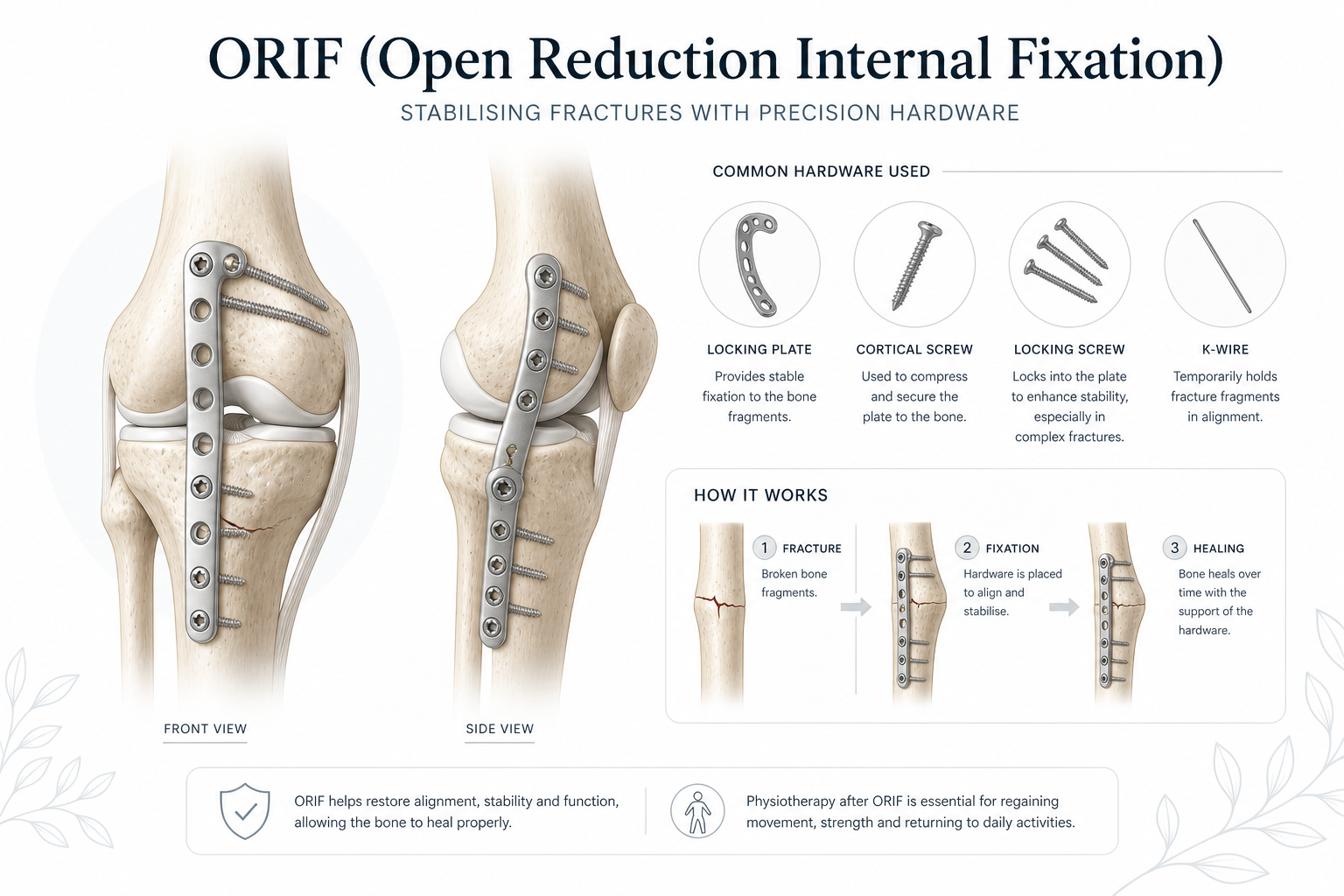
ORIF & Patellar Repair
How Physiotherapy Helps After Knee Surgery
Surgery is only one part of recovery. Without proper rehabilitation, patients may experience stiffness, weakness, or incomplete recovery.
- Restore joint mobility
- Rebuild strength and stability
- Reduce pain and swelling
- Guide safe return to activity
At MoveMed, we work closely with post-surgical patients to ensure a safe and structured recovery.
Book a Post-Surgery AssessmentAbout MoveMed Physiotherapy Singapore
At MoveMed, we support your recovery through purposeful movement.
Our professionally trained physiotherapists at Novena and Orchard provide tailored sessions in a well-equipped facility—featuring treatment beds, shockwave therapy machines and more —to help you regain strength, mobility, and confidence.
Whether it’s pre-op rehab, pain management or post-op rehab, our team is here to guide your journey every step of the way.
📍(Orchard) Movemed Physiotherapy, 391B Orchard Road Ngee Ann City Office Tower B. #25-03 Singapore 238874
📍(Novena) MoveMed Physiotherapy, 10 Sinaran Dr, #09-04, Novena Medical Center, Singapore 307506
🌐www.movemedsg.com
📞 Call / WhatsApp: +65 9627 2000
📧 Email: hello@movemedsg.com
