
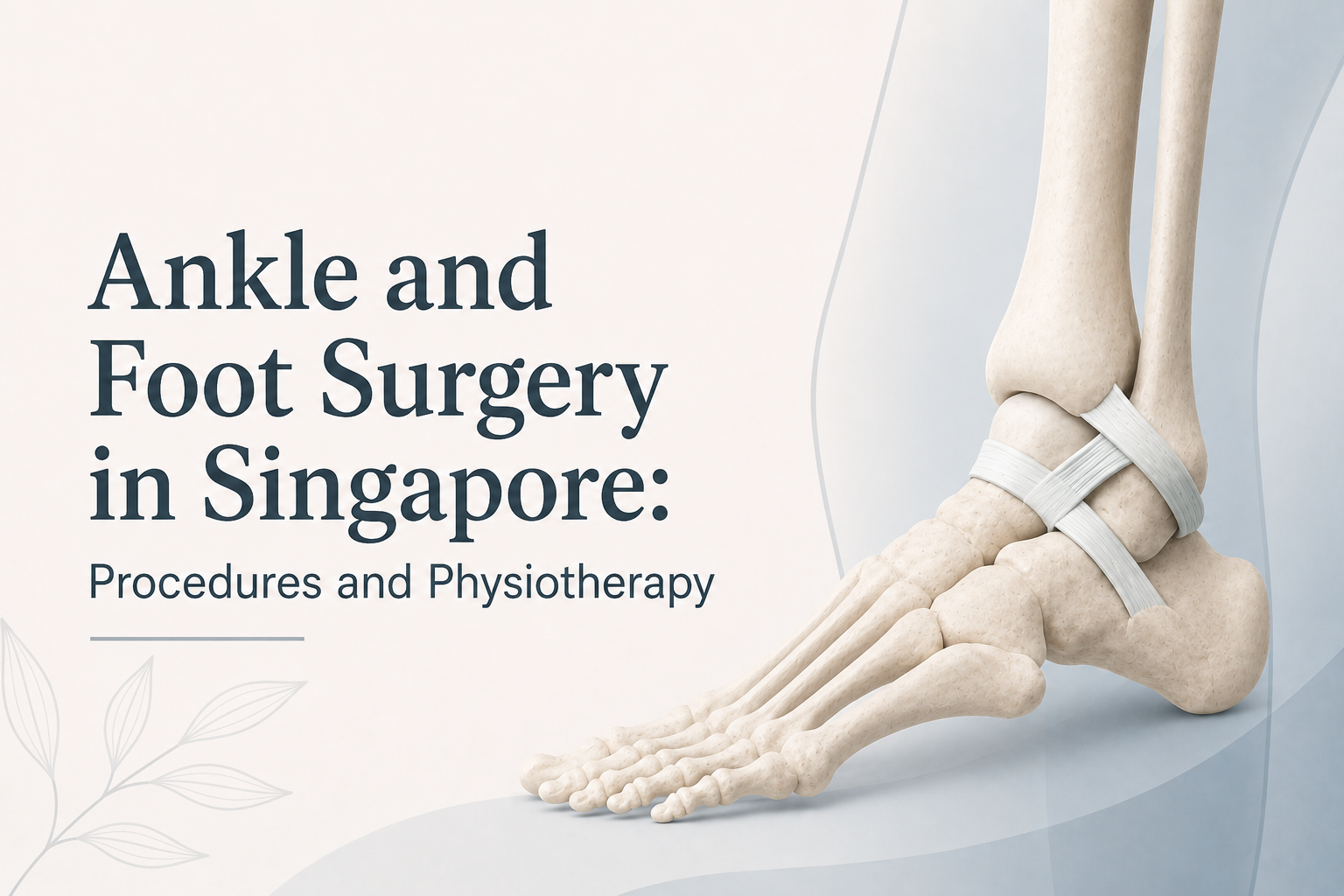
Ankle and Foot Surgery in Singapore: Procedures and Physiotherapy
Elbow and Wrist Surgery in Singapore: Procedures and Physiotherapy
Ankle Ligament Reconstruction
What it is:
A procedure to repair or reconstruct damaged ankle ligaments, commonly performed for chronic ankle instability after repeated sprains.
Common symptoms:
- Repeated ankle sprains
- Feeling of ankle instability
- Pain or swelling around the ankle
- Difficulty with running, jumping, or uneven ground
Recovery:
- Initial protection and controlled weight-bearing
- Gradual mobility and strengthening exercises
- Balance and proprioception retraining
- Return to sport guided progressively over several months
Cubital Tunnel Release
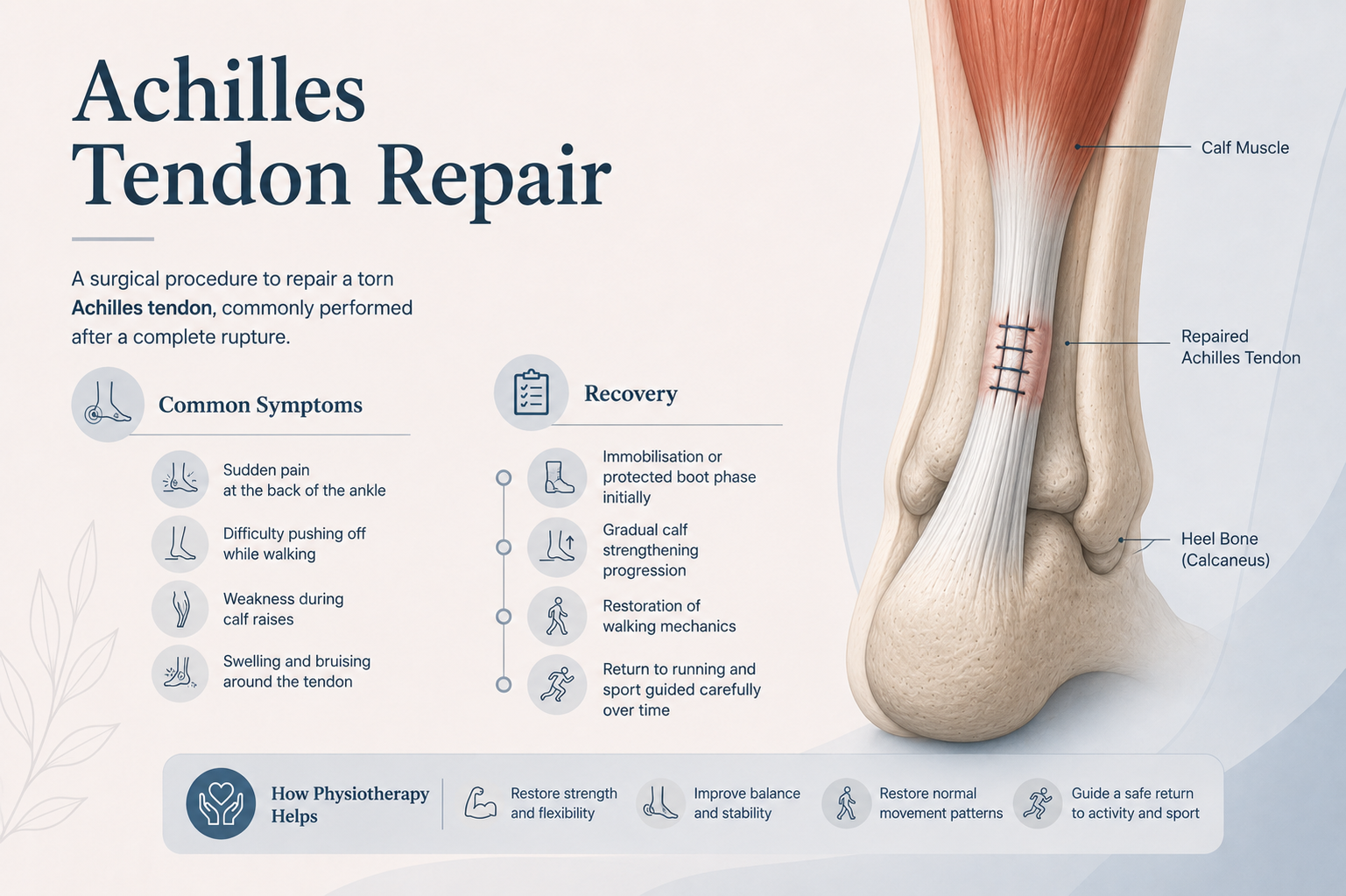
Achilles Tendon Repair
What it is:
Surgical repair of a torn Achilles tendon, commonly performed after a complete rupture.
Common symptoms:
- Sudden pain at the back of the ankle
- Difficulty pushing off while walking
- Weakness during calf raises
- Swelling and bruising around the tendon
Recovery:
- Immobilisation or protected boot phase initially
- Gradual calf strengthening progression
- Restoration of walking mechanics
- Return to running and sport guided carefully over time
Ankle Arthroscopy
What it is:
A minimally invasive procedure using a small camera to diagnose and treat problems inside the ankle joint, such as cartilage injury, impingement, or loose bodies.
Common symptoms:
- Persistent ankle pain
- Swelling or stiffness
- Clicking or catching sensations
- Pain during sport or prolonged walking
Recovery:
- Early mobility exercises may be encouraged
- Progressive strengthening and balance work
- Gradual return to walking and daily activities
- Recovery timeline depends on the procedure performed
Plantar Fascia Release
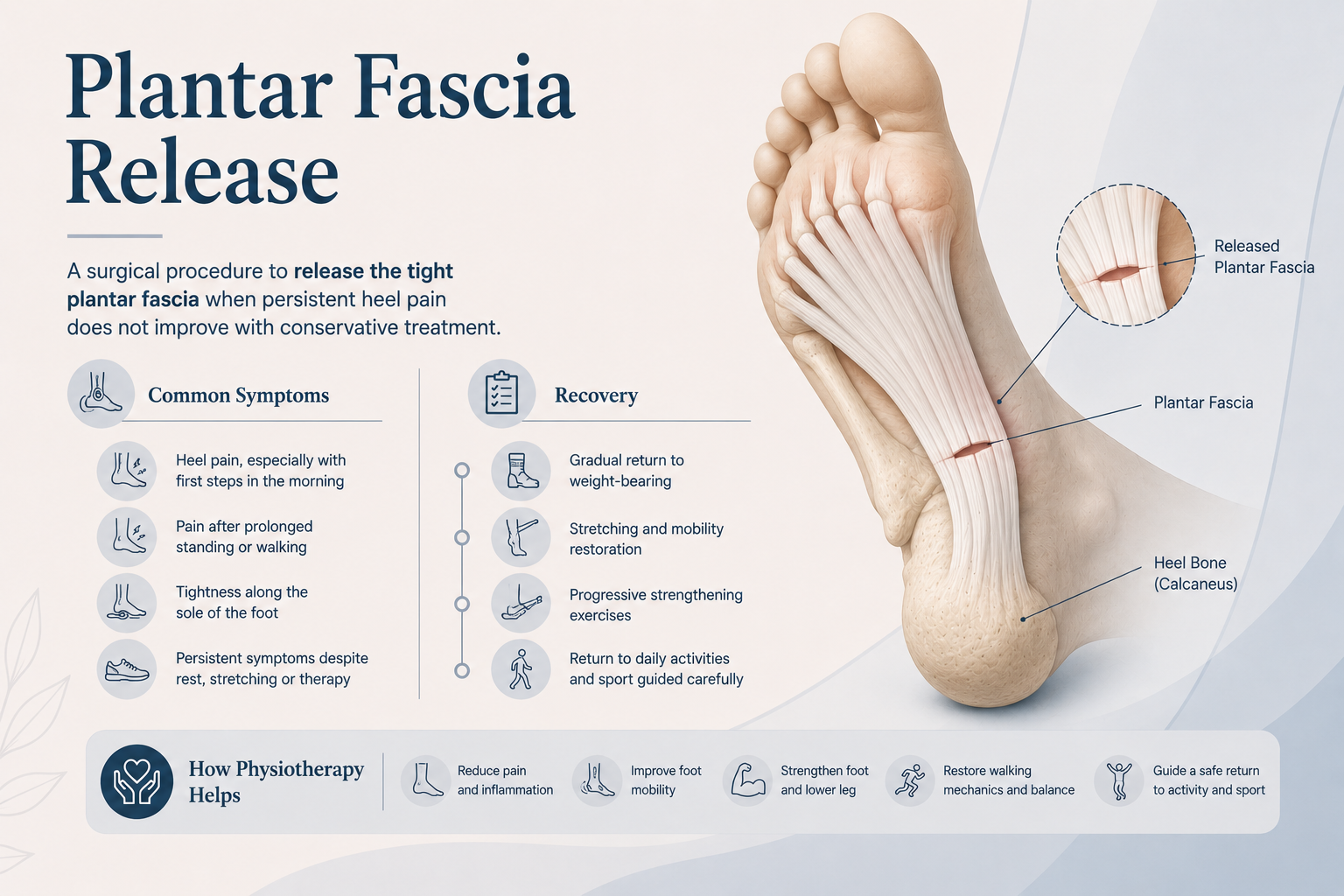
Plantar Fascia Release
What it is:
A surgical procedure to release tight plantar fascia tissue when persistent heel pain does not improve with conservative treatment.
Common symptoms:
- Heel pain, especially during the first steps in the morning
- Pain after prolonged standing or walking
- Tightness along the sole of the foot
- Persistent symptoms despite rest, stretching, or therapy
Recovery:
- Gradual return to weight-bearing
- Stretching and mobility restoration
- Progressive strengthening exercises
- Return to daily activities and sport guided carefully
Bunion Surgery
What it is:
A corrective surgery to realign the big toe joint and reduce bunion deformity, usually when pain or footwear difficulty becomes persistent.
Common symptoms:
- Pain at the base of the big toe
- Difficulty wearing shoes comfortably
- Swelling or redness around the joint
- Progressive toe deformity
Recovery:
- Protective footwear or boot may be used initially
- Gradual restoration of walking mechanics
- Toe mobility and strengthening exercises
- Progressive return to daily activities
Foot Fracture Fixation (ORIF).png
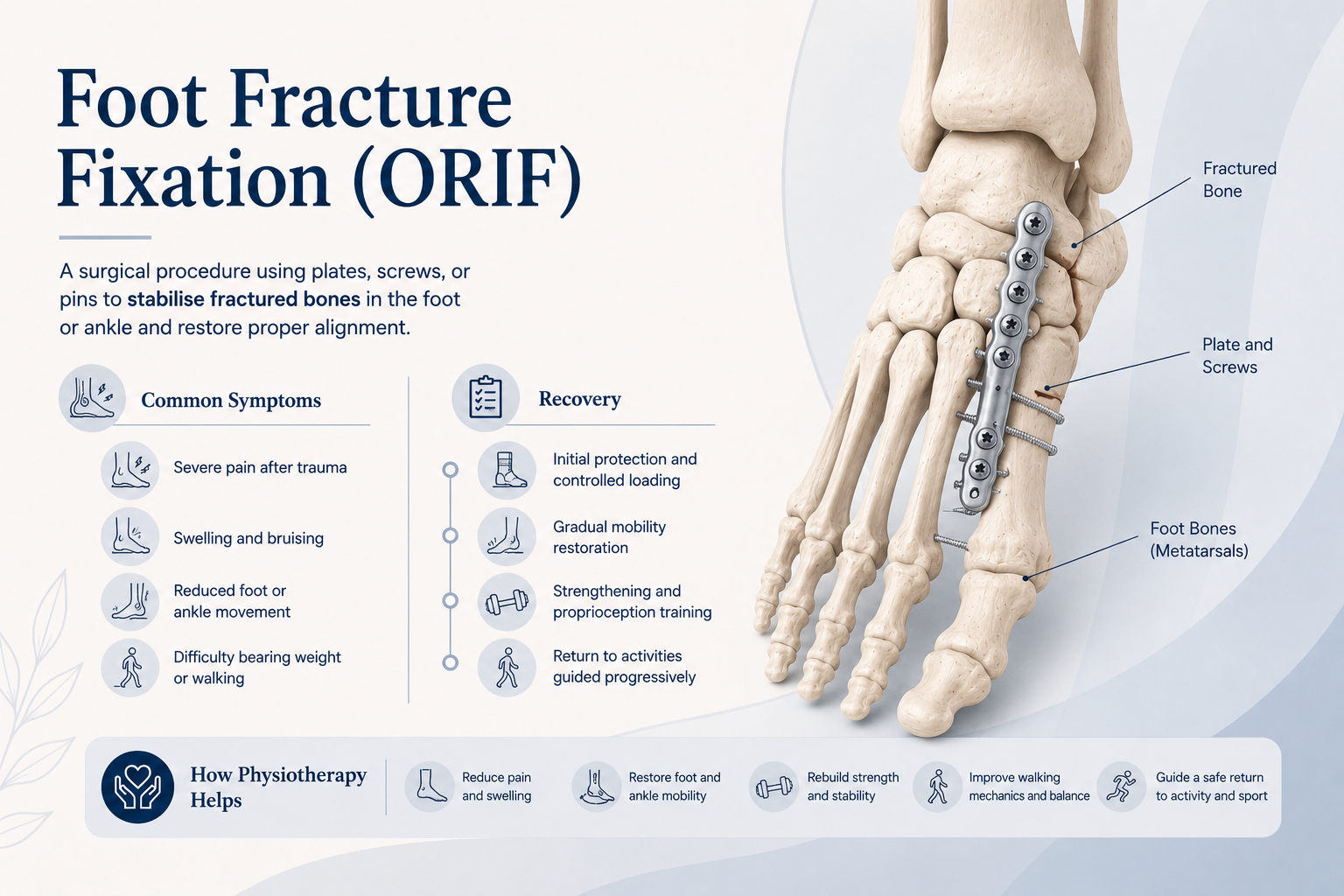
Foot Fracture Fixation (ORIF)
What it is:
A surgical procedure using plates, screws, or pins to stabilise fractured bones in the foot or ankle and restore proper alignment.
Common symptoms:
- Severe pain after trauma
- Swelling and bruising
- Reduced foot or ankle movement
- Difficulty bearing weight or walking
Recovery:
- Initial protection and controlled loading
- Gradual mobility restoration
- Strengthening and proprioception training
- Return to activities guided progressively
Ankle Ligament Reconstruction
What it is:
A procedure to repair or reconstruct damaged ankle ligaments, commonly performed for chronic ankle instability after repeated sprains.
Common symptoms:
- Repeated ankle sprains
- Feeling of ankle instability
- Pain or swelling around the ankle
- Difficulty with running, jumping, or uneven ground
Recovery:
- Initial protection and controlled weight-bearing
- Gradual mobility and strengthening exercises
- Balance and proprioception retraining
- Return to sport guided progressively over several months
How Physiotherapy Helps After Foot and Ankle Surgery
Surgery addresses the structural issue, but recovery depends heavily on rehabilitation. Physiotherapy helps restore movement, strength, balance, and confidence after foot or ankle surgery.
Physiotherapy helps to:
- Restore ankle and foot mobility
- Rebuild strength and stability
- Improve walking mechanics and balance
- Reduce stiffness, swelling, and pain
- Guide safe return to work, sport, and daily activities
At MoveMed, rehabilitation programmes are tailored to the specific surgery, condition, lifestyle demands, and recovery goals of each individual to support a safe and progressive return to function.
About MoveMed Physiotherapy Singapore
At MoveMed, we support your recovery through purposeful movement.
Our professionally trained physiotherapists at Novena and Orchard provide tailored sessions in a well-equipped facility—featuring treatment beds, shockwave therapy machines and more —to help you regain strength, mobility, and confidence.
Whether it’s pre-op rehab, pain management or post-op rehab, our team is here to guide your journey every step of the way.
📍(Orchard) Movemed Physiotherapy, 391B Orchard Road Ngee Ann City Office Tower B. #25-03 Singapore 238874
📍(Novena) MoveMed Physiotherapy, 10 Sinaran Dr, #09-04, Novena Medical Center, Singapore 307506
🌐www.movemedsg.com
📞 Call / WhatsApp: +65 9627 2000
📧 Email: hello@movemedsg.com
